
 Can You Wear Compression Socks to Sleep?
Sleep Health, Bedding, Pillows, Sleep Tips
January 21, 2020, updated on October 15, 2026
How to Find the Best Pillow for Back Sleepers
Written by John-Manuel Andriote

Key Takeaways
To keep your head vertically aligned over your sternum and prevent neck strain, back sleepers need a thinner to medium-thick pillow that cradles the neck without tilting the head too far forward.
Latex provides resilient, cool support; cooling-infused memory foam offers pressure-relieving contouring; and contoured/bone-shaped pillows help align the spine while keeping airways open to reduce snoring.
It’s important to choose pillows suited to individual needs and sleep positions.
Back sleepers generally need a medium-loft pillow that supports the natural curve of the neck without pushing the head too far forward. A pillow with responsive support and moderate height can help keep the ears aligned over the shoulders. The ideal loft depends on body size, mattress firmness, and personal comfort preference.
Although it’s not quite as popular as side sleeping, back sleeping is considered the healthiest way to get shut-eye. Why? Well, sleeping your back keeps your head, neck, and spine in a neutral position, taking pressure off those areas—and making it a whole lot less likely that you’ll wake up in pain.
While back sleeping has its benefits, lying flat can increase your risk of snoring. And if you don’t have the right support under your head, it can actually cause neck pain. That’s why your pillow choice is so important.
“If you are a back sleeper,” says Wisconsin chiropractor Thomas Tozer, “you want to have your head vertically above your sternum. Any time you are turning right or left, you put a strain on muscles.”
How to find the best pillow for back sleepers
To determine whether a pillow is right for you as a back sleeper, Tozer says comfort and support are the two most important guidelines, with support being a slightly more important factor.
| Firmness / Loft | Pressure-Relief Need | Support Need | Materials to Consider |
|---|---|---|---|
| Thin to Medium-Thick (Extra loft at bottom) | Moderate Light head cradling & alignment | High Buoyant support to keep head above sternum | Latex |
| Thin to Medium-Thick (Adjustable loft) | High Conforming relief for head, shoulders & neck | Medium to High Sustained contoured alignment | Memory Foam (Cooling gel / Graphite) |
| Contoured / Curved (Bone-shaped or center dip) | Moderate to High Targeted pressure relief | Very High Ergonomic neck support; opens airways | Contour / Ergonomic Foam |
| Medium / Adjustable | High Plush lower back / lumbar relief | Moderate Maintains lower back curve under knees | Under-Knee Pillow (Foam, Latex, or Fiber) |
| Soft to Medium | High Plush, moldable surface | Low to Moderate May lose structural support when rolling | Down / Down Alternative (Use with caution) |
Alignment and body weight
Choose a thinner to medium-thick pillow
As a back sleeper, you’ll do best on a thinner to medium-thick pillow since this will keep your head, neck, and spine properly aligned. A thinner pillow with extra loft (the pillow’s “lift” or thickness) at the bottom will provide the support you need to cradle your neck.
Try a contour pillow
A contour pillow is ideal for back sleepers, as it curves down to provide good support for your head and neck. By keeping your airways open, a contour pillow can also help alleviate snoring. Tozer also likes bone-shaped pillows for back sleepers because they promote proper head and neck alignment.
Place a pillow under your knees
Back sleepers benefit from pillows that conform closely because they help alleviate pain and soreness in the neck, shoulders, and other areas. If you’re a back sleeper with back pain, try sleeping with another pillow under your knees to maintain the curve of your lower back and relieve discomfort. (Here’s how to protect your back while you sleep.)
Find the best pillow for back sleepers at Saatva
This carousel automatically rotates through products. Use the pause button to stop rotation, or use the slide dots to navigate.
A core of shredded natural latex, wrapped in a breathable organic cotton cover. Plush and responsive for the perfect head and neck support. Breathable shredded memory foam and latex core provides contouring support, while advanced graphite technology draws heat away. A specially engineered blend of shredded gel-infused memory foam and buoyant latex foam offers best-in-class comfort and support.
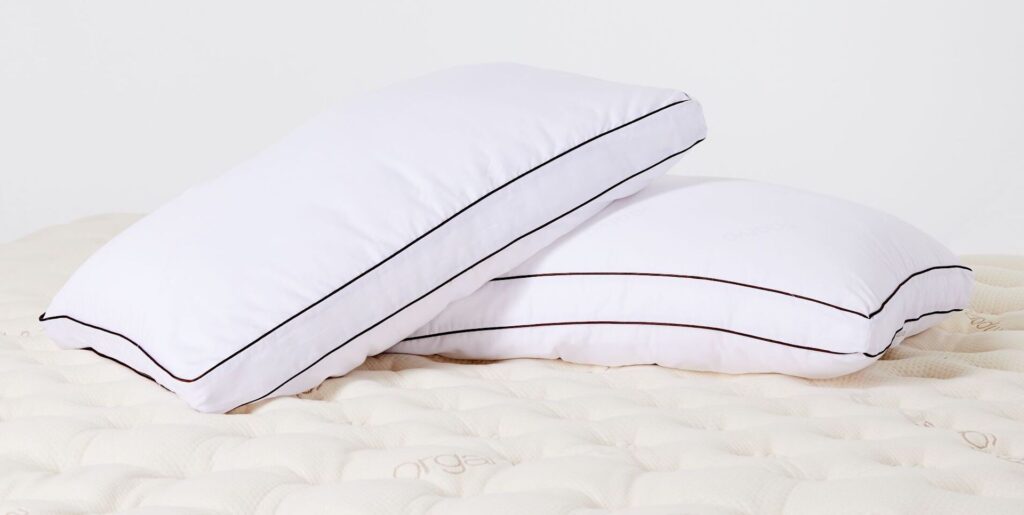 Latex Pillow
Shop Now
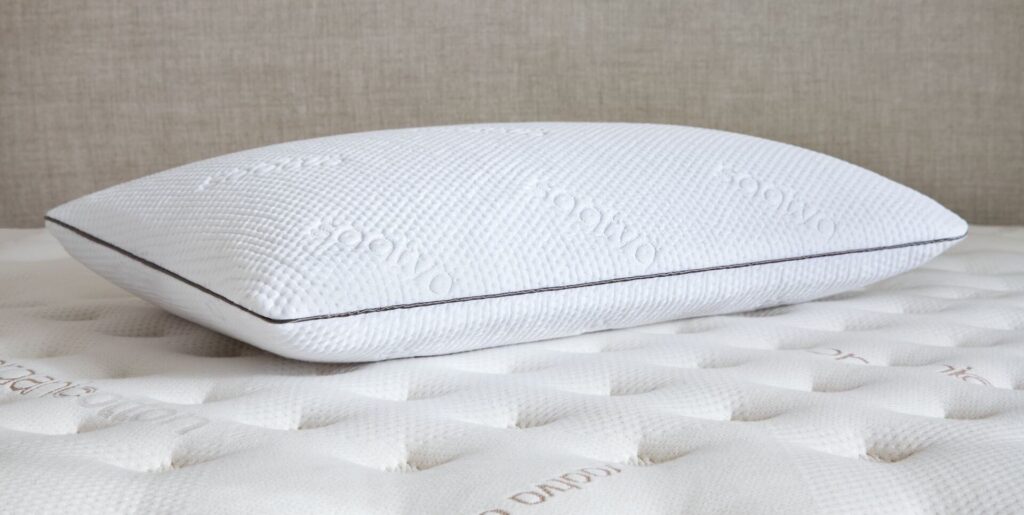 Graphite Memory Foam Pillow
Shop Now
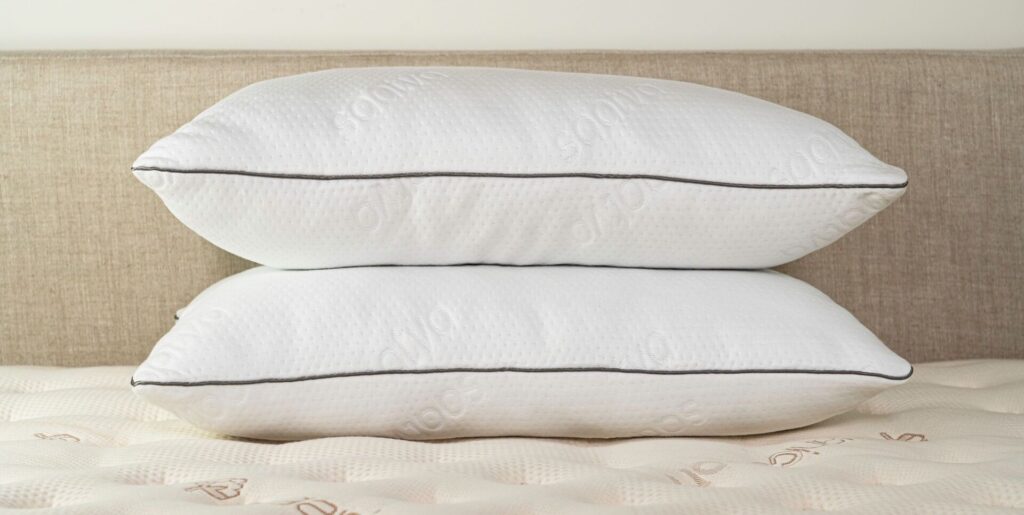 Cloud Memory Foam Pillow
Shop Now
Temperature
Look for a memory foam pillow with cooling features
Memory foam will keep your head in alignment, but its density can cause it to hold body heat, so if you tend to sleep hot, look for one infused with cooling materials like graphite and cooling gel. Some memory foam pillows are made from a single piece of foam, while others have a core of shredded memory foam that you can adjust to mold the pillow as you like.
Materials
Be cautious with down pillows
As for a typical down pillow, “You may be able to position the down to give you the same support, but with rolling around I don’t know if it will maintain the same structure,” says Tozer. (Learn more about the different types of pillows.)
Consider a latex pillow
When it comes to pillow materials, you have some options. “If you’re a back sleeper there are multiple materials with the benefits of coolness and firmness, so there’s a little bit of flexibility there,” says Tozer. Latex pillows are especially good for back sleepers. Latex is buoyant and responsive and excels at head and neck support. It also sleeps cool.
FAQs
Does body weight change the recommendation?
Yes. Body weight affects how deeply you sink into a mattress or pillow, so the same firmness or loft can feel different from person to person. Use general sleep-position guidance as a starting point, then adjust for body type and comfort.
How can I tell if my sleep setup is supportive enough?
Your head, neck, and spine should feel comfortably aligned without excessive pressure or deep sinkage. Persistent pain, numbness, or tingling should be evaluated by a healthcare professional rather than addressed only by changing bedding.
How to tell if your setup is wrong
Even with a high-quality pillow, the wrong loft or support level can throw off your alignment and prevent you from getting restful sleep. Watch out for these common warning signs that your back-sleeping setup needs an adjustment:
- Morning neck pain or stiffness: If you wake up with a sore neck or shoulder tension, your pillow is likely either too thick—pushing your head forward—or too flat, failing to properly cradle your neck.
- Increased snoring: While back sleeping naturally increases snoring risk, a pillow that tilts your chin toward your chest can compress your airways and make snoring worse.
- Lower back aches: Lying completely flat can put extra strain on the natural curve of your lumbar spine. If you wake up with lower back tightness, your spine isn’t getting adequate support.
- Constant pillow adjustment: If you find yourself repeatedly turning, fluffing, or re-folding your pillow throughout the night to stay comfortable, it’s not maintaining the structure needed to keep your head vertically above your sternum.
The fix: Aim for a setup that keeps your head, neck, and spine neutrally aligned. If you’re experiencing neck pain or snoring, switch to a thinner to medium-thick pillow or a contoured design. If lower back pain is the issue, place a supportive pillow under your knees to maintain the lower back curve and relieve pressure.
The bottom line on pillows for back sleepers
Just remember: Tozer says it’s important to buy pillows suited to your individual needs. This is particularly the case for couples who share a bed because too often they’ll buy a pair of identical pillows, “yet the two who will be using those will be different,” says Tozer, adding that the goal is “buying a pillow that is individually fit to their sleep position and posture.”
Need more advice on finding a pillow? Here’s how to choose the right pillow for your sleep position.

John-Manuel Andriote
John-Manuel Andriote began writing about health and medicine while working on a master’s degree in journalism at Northwestern University in the mid-1980s. He is the author of six books, including an award-winning history of the HIV-AIDS pandemic, a book focused on building resilience, and a “fable for kids ages 5 to 105” based on the true story of a runaway cow in Andriote’s home state of Connecticut. He has contributed articles to newspapers and magazines ranging from The Atlantic to The Washington Post. He writes the “Stonewall Strong” blog focused on resilience for Psychology Today. Andriote since August 2021 has been the senior writer for Winship Cancer Institute of Emory University, in Atlanta, Georgia.
Related Stories
-
Can You Wear Compression Socks to Sleep?
-
 Are There Fleas in Your Bed? Here’s How to Tell (and What to Do About It)
-
 Can Ube Help You Sleep Better?
Table of Contents
