
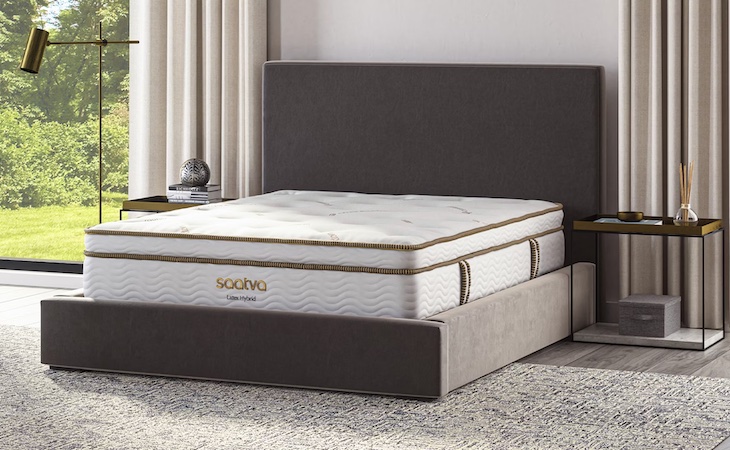
 Best Labor Day Mattress Sales of 2026
Mattresses, Bedding, Mattress Pads & Toppers, Mattress Types & Sizes
November 21, 2019, updated on October 15, 2026
How Graphite Keeps You Cool While You Sleep
Written by Christina Frank
Key Takeaways
True sleep temperature management relies on three distinct elements working together—airflow (ventilation), thermal conductivity (heat transfer), and moisture management (sweat-wicking).
Materials like gels or surface treatments can feel chilly the moment you lie down, but conductive materials like graphite work continuously over an 8-hour night to draw heat away from the body.
Specialty foams only manage heat transfer inside the mattress; room temperature, AC, fan circulation, and breathable sheets (like cotton or bamboo) are equally essential for a cool night’s sleep.
Graphite is used in some sleep products to help move heat away from the body and reduce heat buildup at the sleep surface. In memory foam, graphite can improve thermal conductivity compared with conventional foam alone, but overall cooling also depends on airflow, cover materials, foam density, room temperature, and bedding. It should be evaluated as one part of a complete cooling system rather than as a standalone solution.
Being too hot when you sleep is not only uncomfortable, it can actually interfere with your natural sleep cycle. In fact, one study found that being too warm when you sleep can disrupt stages three and four of sleep—the deepest and most restorative phases, during which body tissues repair themselves—as well as REM sleep, when memories are consolidated.
To mitigate the tendency of certain types of mattresses to trap heat, manufacturers have started to add cooling technology to their bedding products. One of the newest options you’ll find is graphite.
Here, learn about how graphite works and how it can help you achieve a cooler night’s sleep.
What does “cooling” actually mean?
When shopping for sleep products, the term “cooling” is often used broadly, but true thermal comfort relies on three distinct mechanisms:
- Airflow: The physical movement of air through the core of a mattress or bedding, which allows body heat and humidity to escape rather than building up beneath you.
- Heat transfer (thermal conductivity): The ability of a material to actively pull thermal energy away from the surface and disperse it. This includes the initial cool-to-touch feel (how a material feels the moment you lie down, which is often a temporary sensation as the material matches your skin temperature) versus sustained heat management (how effectively a material continuously moves heat away over an 8-hour night).
- Moisture management: The ability of a fabric or foam to absorb or wick away sweat and humidity so you don’t sleep in a damp microclimate.
What is graphite, and how does it work?
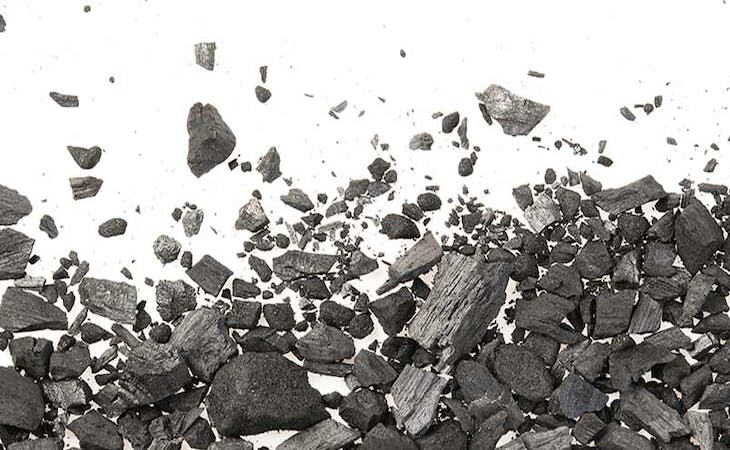
Graphite is a naturally occurring form of crystalline carbon. It has been used for years to pull heat away from expensive components in computers and electronics.
In memory foam, graphite is either mixed into the foam matrix or applied as a surface layer. When you lie down, your body heat is conducted into the graphite particles. Because graphite has a high thermal conductivity compared to conventional polyurethane foam alone, it helps transfer heat horizontally and away from your body, preventing it from pooling directly beneath you.
However, graphite alone is only one piece of the puzzle. While it aids in conductive heat transfer, a graphite-infused foam still relies on the surrounding mattress construction—such as open-cell foam structures or specialized channels—to achieve sustained airflow.
Where is graphite popping up in bedding these days?
For the most part, cooling substances such as graphite are used in memory foam mattresses since innerspring and latex mattresses have a more open structure that allows for better airflow.
Memory foam mattresses are made from viscoelastic foam, a type of high-density polyurethane foam. (Greener versions use plant-based ingredients like soybean oil in place of some of the petroleum derivatives.) Memory foam’s distinguishing feature is that it softens in response to heat and pressure, which makes it a favorite among many sleepers—except for the fact that it holds onto heat. That’s where cooling elements come in.
To make graphite memory foam, graphite is either mixed into the foam itself or applied as a thin, separate layer on the top of the mattress. The weight of the sleeper sinking into the foam forces the graphite particles closer together, allowing them to conduct heat through the foam and dissipate it quickly.
Related: Why some mattresses “sleep hot” (and what to do about it)
Where else can you find graphite?
In addition to mattresses, memory foam pillows and mattress toppers now come in graphite-infused versions. Graphite in a memory foam pillow specifically will draw heat away from your head and neck, one of the warmest parts of the body.
Enjoy cooler sleep with graphite-infused bedding from Saatva
This carousel automatically rotates through products. Use the pause button to stop rotation, or use the slide dots to navigate.
The latest in high-tech cooling. The contouring support of memory foam, plus the advanced heat-dissipating properties of graphite. Breathable shredded memory foam and latex core provides contouring support, while advanced graphite technology draws heat away.
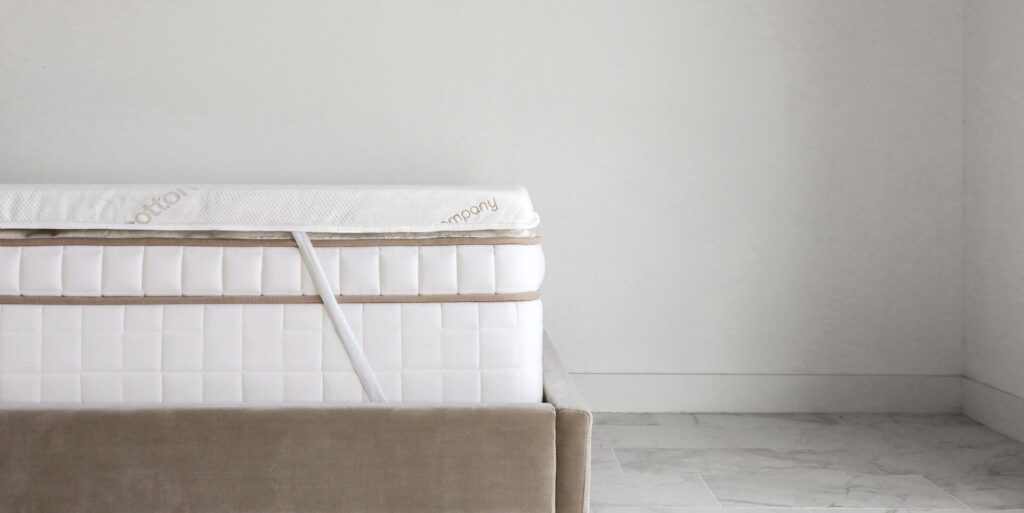 Graphite Memory Foam Mattress Topper
Shop Now
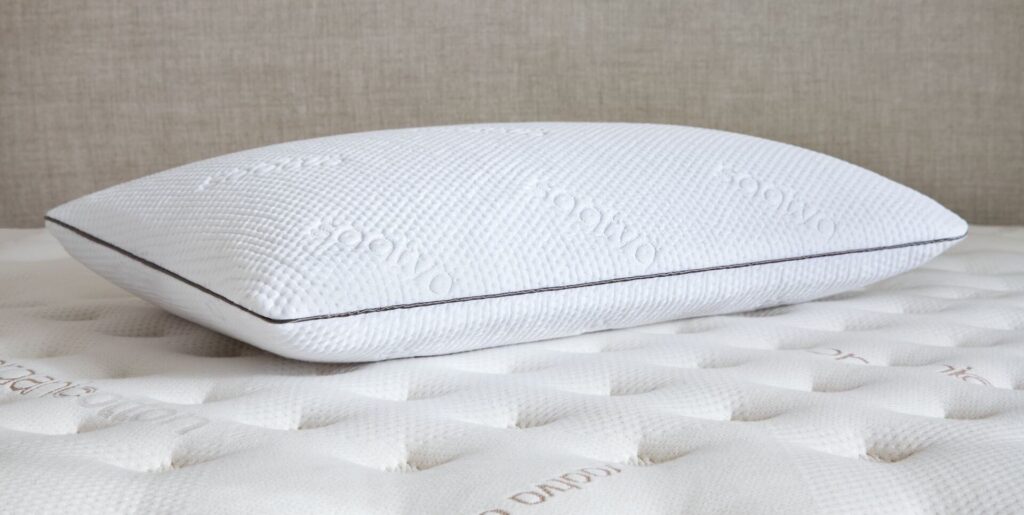 Graphite Memory Foam Pillow
Shop Now
What are some other popular cooling materials besides graphite?
Graphite-infused products are a great way to stay cool, but not the only way. Other products to help you chill while you sleep include:
Gel-infused memory foam
Similar to graphite-infused mattresses, toppers, and pillows are those infused with polymer gels, which also work by effectively soaking up the thermal energy from your body and dispersing it throughout the surface of the mattress. Some gels are infused with copper, another element with cooling properties.
Cotton bedding
Cotton is naturally porous, hence highly breathable, which is why it feels cool against your skin and is used in bedding products and pajamas. Some synthetic fabrics have similar cooling capabilities, but many are made using chemicals or chemical processes.
Bamboo bedding
Bamboo is one of the most breathable and lightweight fabrics. As with cotton varieties, you can find sheets and pajamas made of this fabric. Bamboo is also eco-friendly.
Moisture-wicking bedding
This synthetic material absorbs sweat—a quality that is highly appreciated if you’re experiencing night sweats, one of the common complaints among menopausal women (or if you’re just sweaty in general).
Electric cooling pads
Electric cooling pads go on top of the mattress like a regular topper but are slightly thinner than regular toppers. The downside is that you have to plug them in, which some people find off-putting.
Finally, there are the obvious, old-school options, such as fans, cranking up the A/C, and sleeping in the buff.
| Cooling Mechanism | Primary Function | Pros (Advantages) | Tradeoffs / Limitations |
|---|---|---|---|
| Graphite-Infused Foam | Conductive heat transfer; moves heat horizontally away from the body. | Improves thermal conductivity of dense memory foam without altering contouring feel. | Provides limited standalone airflow; heavily relies on overall mattress construction and room environment. |
| Gel-Infused Foam | Absorbs and disperses thermal energy across the sleep surface. | Offers a pleasant initial cool-to-touch feel when first lying down. | Gel can eventually warm up to body temperature over a long duration without continuous airflow. |
| Natural Fibers (Cotton & Bamboo) | Breathability, airflow, and localized moisture control. | Highly breathable, soft against skin, and naturally porous. | Does not actively conduct heat away like minerals or gels; depends on room airflow. |
| Moisture-Wicking Synthetic Fabrics | Sweat absorption and humidity reduction. | Prevents damp microclimates, ideal for heavy sleepers or night sweats. | Synthetic materials may lack the organic, breathable feel of natural fibers. |
| Electric Cooling Pads | Active temperature control via circulating air or liquid. | Provides precise, sustained temperature regulation throughout the night. | Requires a power source, takes up bedside space, and is typically a higher-cost option. |
FAQs
What is the most important thing to consider before buying?
Start with the problem you need the product to solve, then compare support, comfort, materials, durability, care requirements, and return or trial terms. Avoid choosing on a single marketing feature alone.
Does graphite in a mattress wear out over time?
No. Graphite particles are chemically stable and physically embedded throughout the foam matrix or layer, meaning they retain their thermal conductivity properties for the lifetime of the mattress.
The right sheets can also prevent you from overheating while you snooze. Here are the best sheets to keep you cool.

Christina Frank
Christina Frank is a Brooklyn-based writer and editor specializing in health, medicine, and animal welfare.
Related Stories
-
Best Labor Day Mattress Sales of 2026
-
 Best July 4th Mattress Sales of 2026
-
 Best Memorial Day Mattress Sales of 2026
Table of Contents
