
 Tips and Tricks for Putting a Comforter in a Duvet Cover
November 19, 2019, updated on October 19, 2026
Memory Foam Pillows: A Buyer’s Guide
Written by Tanya Slavin
Key Takeaways
Memory foam conforms to your head and neck to ease pressure, making it great for back and side sleepers as well as people who move around at night.
You can choose between one piece or shredded foam, flat or contoured shapes, and opt for cooling infusions or plant based materials to fit your needs.
High quality pillows cost up to 200 dollars and last over three years, but the foam must be hand washed only and never put in a washing machine.
When choosing memory foam pillows, focus first on fit for your body and sleep needs rather than marketing claims. Compare materials, support, comfort or firmness, temperature regulation, durability, care requirements, trial or return terms, and total cost. The best option is the one that solves the specific problem you are shopping for while remaining comfortable and practical over time.
Memory foam has been used as a bedding material since it was first invented by NASA researchers in the 1960s. (Fun fact: Its original purpose was to provide better cushioning for test pilots during flights.) Since then it has been steadily growing in popularity, with the entire memory foam mattress and pillow market predicted to reach more than $8 billion by 2023.
Memory foam is the more popular term for viscoelastic foam, which is a type of high-density polyurethane foam. It’s a manmade material that softens when it comes into contact with body heat and pressure, allowing it to conform closely to your body contours and spring back into its shape as it cools down.
Memory foam pillows are particularly good if you suffer from head, neck, or shoulder pain. If you’re thinking about getting a memory foam pillow, here’s how to find the right one for you.
Memory foam pillow decision guide
Choosing the right memory foam pillow depends on your individual sleep habits and preferences. Use these key criteria to find your ideal fit:
- Structure (one piece vs. shredded): Choose a one piece pillow if you sleep in one position and need consistent support. Opt for shredded foam if you move around, like to scrunch your pillow, or want better airflow.
- Shape (contoured vs. flat): Pick a contoured shape to cradle your head and neck if you stay in one position all night. Select a flat design if you switch sleeping positions frequently or prefer a lower loft.
- Temperature control: Look for cooling gel, graphite, copper, or silver infusions paired with a breathable cotton or bamboo cover if you tend to sleep hot.
- Eco friendliness: Select plant based memory foam certified by third parties like CertiPUR-US to reduce chemical off gassing and synthetic materials.
- Sleeping position: Avoid thick memory foam if you sleep primarily on your stomach, as it may misalign your neck.
- Budget and care: Expect to pay between 30 dollars for basic models and up to 200 dollars for high end options. Wash the removable cover monthly, spot clean the foam by hand, and never machine wash the pillow itself.
| Decision Category | Key Options | Best Suited For / Key Benefits | Things to Keep in Mind |
|---|---|---|---|
| Foam Structure | One-Piece vs. Shredded | One-Piece: Consistent support for single-position sleepers. Shredded: Highly moldable, lighter weight, and better airflow for those who like to adjust their pillow. | Stomach sleepers may find solid memory foam too thick. |
| Shape Design | Contoured vs. Flat | Contoured: Shaped to cradle the head and neck at a specific angle. Flat: Better for combination sleepers who change positions often. | Contoured pillows offer less flexibility if you move around or if the loft doesn’t match your preference. |
| Materials & Eco-Friendliness | Standard vs. Plant-Based | Plant-Based: Replaces petroleum with plant oils (e.g., soybean), lower VOCs, free of heavy metals/formaldehyde, often third-party certified (CertiPUR-US, Greenguard). | Standard memory foam is synthetic and may produce chemical off-gassing. |
| Temperature Regulation | Standard vs. Cooling Infused (Gel, Graphite, Copper, Silver) | Cooling-infused foams and breathable covers (organic cotton, bamboo) help dissipate body heat. | Traditional memory foam tends to trap heat and sleep warm. |
| Maintenance | Removable Cover & Hand-Washable Foam | Covers are removable and machine-washable (recommended monthly). Foam can be spot-cleaned by hand 1–2 times per year. | Memory foam pillows must never be put in a washing machine. |
| Price Range | $30 to $200+ | Lower-quality options start around $30; higher-quality queen or king sizes range from $150 to $200. | Lifespan is typically around 3 years or more for high-quality models. |
What are the benefits of sleeping on a memory foam pillow?
What sets memory foam apart from other pillow fillings? Here are the top three benefits of sleeping on a memory foam pillow:
- Memory foam pillows help relieve pain and pressure. Memory foam softens when it comes in contact with your body and conforms to your unique shape. Due to its ability to mold to your curves, it offers excellent pain and pressure relief for your head, neck, and shoulders.
- Memory foam pillows work for a variety of sleep styles. Because memory foam provides such fantastic support for your head and neck, it’s a great choice for a variety of sleep positions. Memory foam pillows are especially good for mixed-style sleepers because they adjust to the shape of your body as you move around at night.
- Memory foam pillows are hypoallergenic. If you have allergies, then a memory foam pillow is worth looking into as memory foam inhibits the growth of dust mites.
Even with all these benefits, keep in mind that memory foam pillows aren’t for everyone. For example, stomach sleepers will probably find them too thick. People who sleep hot may also not do well with memory foam, as this material tends to trap heat. That said, you can now find memory foam pillows made with cooling gel and high-tech materials such as graphite if sleeping hot is a concern for you.
Related: Latex pillows: A buyer’s guide
Improve your sleep with these memory foam pillows
This carousel automatically rotates through products. Use the pause button to stop rotation, or use the slide dots to navigate.
Breathable shredded memory foam and latex core provides contouring support, while advanced graphite technology draws heat away. A specially engineered blend of shredded gel-infused memory foam and buoyant latex foam offers best-in-class comfort and support.
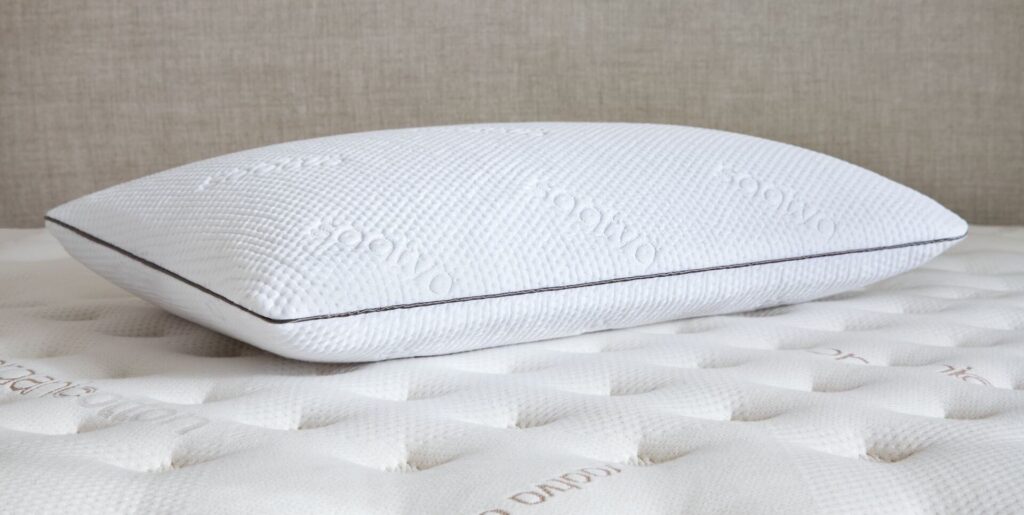 Graphite Memory Foam Pillow
Shop Now
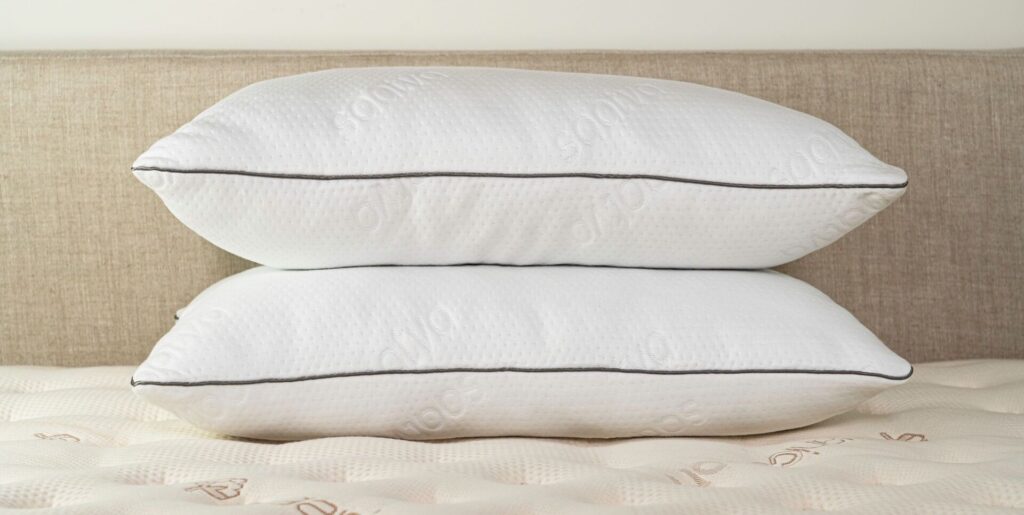 Cloud Memory Foam Pillow
Shop Now
What kind of memory foam pillow is right for you?
Several types of memory foam pillows are available today. There are pillows made from one piece of memory foam and ones filled with shredded memory foam. Some are contoured and others are flat. The choice will come down to your sleep needs and your personal preference. Here’s a rundown of the most popular types of memory foam pillows.
One-piece vs. shredded
Memory foam pillows can be made from a single piece of foam or contain a core of shredded foam. Each type has its benefits. One-piece pillows are great for people who sleep in one position and need consistent support throughout the night. Shredded memory foam pillows, on the other hand, are more moldable, which may appeal to people who like to scrunch their pillow to achieve the optimal support. Shredded pillows also tend to be lighter and provide better airflow than one-piece pillows.
Contoured vs. flat
Solid memory foam pillows can be contoured or flat. Both types provide excellent support, but contoured pillows are also cut into a shape that is designed to cradle your neck and head at just the right angle. This might be the right type of pillow for you if you tend to sleep in one position throughout the night. But if the shape of the contoured pillow doesn’t feel right to you or provides too much loft—or if you change positions often when you sleep—then you may prefer a flat pillow.
Greener options
For a more eco-friendly version, consider getting a pillow made from plant-based memory foam. In plant-based memory foam, a portion of the petroleum derivatives is replaced with plant-derived ingredients such as soybean oil. This greener memory foam is lower in VOCs and free of formaldehyde or heavy metals. Plant-based foams also have improved breathability and no chemical off-gassing. Often such foams carry third-party certifications, like CertiPUR-US®1 or Greenguard.
Cooling materials
Because memory foam tends to trap heat, look for a memory foam pillow infused with a cooling gel or another material that has cooling properties such as graphite, copper, or silver. The cover of the pillow also makes a difference in heat retention. A pillow cover made from a breathable material such as organic cotton or bamboo will sleep cooler than one covered in a synthetic fabric.
Related: The best sheets to keep you cool
FAQs
How do you clean a memory foam pillow?
Memory foam pillows should never be put in a washing machine, although most come with removable covers that can be machine washed. The removable cover of the pillow should be washed at least monthly— more often in hot weather when you’re sweating more frequently.
As for the pillow itself, you should hand wash it once or twice a year, following the manufacturer’s instructions. Typically, that will involve dabbing stains with a cloth soaked in lukewarm water and a bit of mild detergent, then letting the pillow air-dry. A high-quality memory foam pillow should last you three years or more.
How much do memory foam pillows cost?
Memory foam pillows range in price depending on their size, the type of foam, and the type of cover. Lower quality memory foam pillows may start around $30, while higher-quality ones will cost between $150 and $200 for a queen or king size.
What is the most important thing to consider before buying?
Start with the problem you need the product to solve, then compare support, comfort, materials, durability, care requirements, and return or trial terms. Avoid choosing on a single marketing feature alone.
Is pain keeping you up at night? Here’s how to find the best pillow for back and neck pain.
- CertiPUR-US® is a registered trademark of the Alliance for Flexible Polyurethane Foam, Inc. ↩︎

Tanya Slavin
Tanya Slavin is a freelance writer with a PhD in Linguistics. When she has had enough sleep, she learns languages and writes about it in her newsletter Friends with Words which documents her journey to learn 12 languages in 12 months.
Related Stories
-
Tips and Tricks for Putting a Comforter in a Duvet Cover
-
 Best Cyber Monday Bedding, Pajamas, and Tech Deals of 2025
-
 Best Black Friday Bedding Deals of 2025
Table of Contents
