
 Can You Wear Compression Socks to Sleep?
October 19, 2026
Are There Fleas in Your Bed? Here’s How to Tell (and What to Do About It)
Written by Leandra Beabout
Key Takeaways:
-
- Flea infestations in bed are best identified by bites on the lower legs and ankles as well as “flea dirt” (black specks that turn red when dissolved on a wet paper towel).
- Fleas are a household issue rather than just a pet problem, meaning you must simultaneously treat your pets, hot-wash bedding, steam-clean, and vacuum to break their life cycle.
- Eradicating fleas requires multi-week follow-up treatments because flea eggs in mattresses, carpets, and furniture will continue to hatch after adult fleas are killed.
No one wants to think about fleas in the house, let alone the bed. But if you’re searching for an answer to how to know if you’ve got fleas, you’re probably also wondering, “How can I get rid of them and keep them away forever?”
Like bed bugs, fleas stay alive by feeding on blood. But unlike bed bugs, fleas can carry or spread disease. According to the Centers for Disease Control and Prevention (CDC), fleas in the United States have been known to carry plague, typhus, cat scratch disease (CSD), and parasites.
Below, we cover how to tell whether you have fleas in your bed, how to tell the difference between a flea bite and a bed bug bite, how to get rid of fleas in the bedroom, and how to prevent a future infestation.
How to tell if you have fleas in your bed
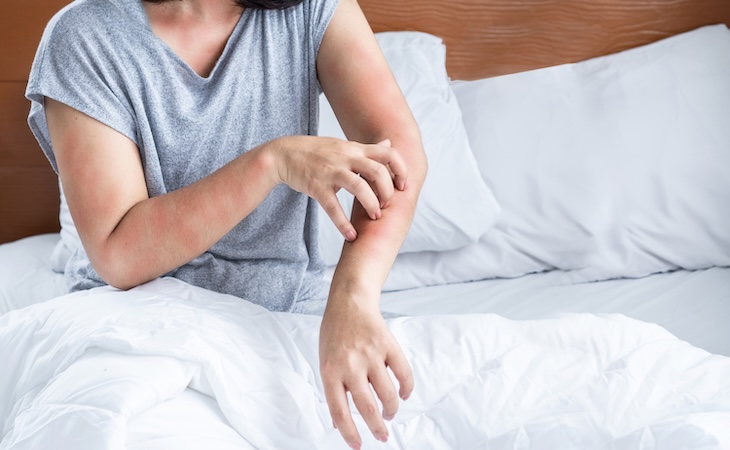
Fleas need blood to live, so they’re more likely to cling to you or your pet than burrow in your mattress or bedding. If you wake up with red, itchy dots in a cluster or line on exposed skin, you may have been bitten by fleas overnight.
While you might not see fleas on your bed in the morning (again, they like to stay close to skin or fur), they may leave evidence behind. Here’s what to look for:
- Dark spots (flea dirt). Flea waste, or flea feces, may look like little black specks on your sheets or mattress. It’s often described as looking like ground pepper.
- Reddish marks. Though not from the fleas themselves, red specks on the bed could mean you or your pet scratched flea bites throughout the night.
- Oval white specks. Fleas lay eggs that look like grains of salt or tiny flecks of dandruff. If you suspect a flea infestation, check your pet’s fur and your bedding.
Bottom line: Bites (on you or your pet) are the first indicator of a flea infestation. If you notice new bites after waking up, check the bed for tiny dark, rust-colored, or white spots.
Flea bites vs. bed bug bites: how to spot the difference
Waking up with any new bites is alarming, but how do you know whether you’ve been visited by fleas, bed bugs, or something else? Unfortunately, it’s not easy to tell.
“Flea bites and bed bug bites can look similar,” says Nneoma Oparaji, MD, a board-certified lifestyle medicine specialist in Houston, Texas. “Location can offer an important clue. Flea bites typically appear as small, intensely itchy bumps around the ankles and lower legs, while bed bug bites are more often found on skin exposed during sleep such as the arms, neck, scalp, or face.”
Anthea Nwandu, MD, a board-certified internist and lifestyle medicine physician in Baltimore, Md., adds: “The bigger clue is often what else is happening in the environment. Does a pet have fleas or ‘flea dirt’? Are there fleas in carpeting or pet bedding? Or, alternatively, are there signs of bed bugs around the mattress, box spring or bed frame?”
While both flea bites and bed bug bites can pop up in clusters, flea bites are more likely to appear in a line or triangular pattern.
| Attribute | Flea Bites | Bed Bug Bites |
| Appearance | -Small -Red -Often in a line or triangular pattern | -Small -Red -Often in a cluster or zigzag pattern |
| Symptoms | -Very itchy -Irritated | -Painless at first -Itchy -Irritated |
| Location | -Ankles -Lower legs | -Arms -Neck -Face -Scalp |
| Environmental clues | -Flea dirt -Pet has bites too | -Signs of bed bugs in crevices of mattress, box spring, or bed frame |
‘Flea dirt’ test: simple paper towel diagnostic
One of the easiest ways to tell you have fleas is by looking for flea excrement, not flea bites. The “wet paper towel test” is simple:
- Check. Scan your bedding, carpet, or pet’s fur for so-called flea dirt, which looks like powdered black pepper.
- Collect. If you find some residue, gather it.
- Place. Put the residue on a slightly wet, white paper towel or tissue.
- Watch. If the spots turn reddish-brown when they dissolve, it’s probably flea dirt. The red color comes from undigested blood.
Step-by-step protocol to eradicate fleas from mattress and bedding
Buckle up because getting rid of a flea infestation can take months, according to the CDC.
The reason? Oparaji explains that treating pets for fleas will only eradicate adult fleas, while flea eggs will continue to hatch in bedding, furniture, and carpeting if they aren’t also destroyed.
The CDC outlines a four-step process for eliminating flea infestations.
- Thoroughly clean. This step includes several actions, including: 1. Wash all human and pet bedding—sheets, pillowcases, comforters, blankets, and mattress pads—in very hot water. (This typically means 140 degrees Fahrenheit or more.) 2. Sanitize or steam-clean furniture and rugs at 130 degrees Fahrenheit or more. 3. Thoroughly vacuum the affected rooms and the mattress, including cracks, crevices, and seams. Afterward, seal the vacuum bags and throw them away.
- Get your pet treated. Bathe household pets with soap and water, then comb through their hair with a flea comb. Talk to your veterinarian about the best flea treatments for your animal(s).
- Treat your home and yard. Talk to a pest control professional about the best flea-killing products for your living spaces. You’ll likely need to use at least one Insect Growth Regulator (IGR) spray. The CDC recommends treating outdoor areas that are shady or frequented by animals.
- Schedule follow-up cleaning and treatments. Fleas can be resistant to insecticides at certain stages of their life cycle. The CDC recommends at least two follow-up cleanings and treatments, with the first one scheduled five to 10 days after your first round.
Treating pets, carpets, and home environment simultaneously
“Fleas are not just a pet problem,” Oparaji says. “They are a household problem.”
In other words, it’s vital to treat your pets, carpets, and bed at the same time—and then to repeat the process again about a week later.
Fleas can live up to three months with the right environmental factors and a steady diet of blood.
So while infestations can absolutely be eradicated and prevented, getting the job done may take weeks or months of focused, continuous treatment of your pets and home environment.
“The goal isn’t simply to kill the fleas you see today,” Nwandu says. “It’s to interrupt the life cycle so you don’t meet the next generation a few weeks later.”
Preventive measures to stop flea re-infestations
The best way to prevent a flea infestation in your bedroom or home is to keep your pets flea-free, according to the CDC.
Tips to keep your pets free of fleas
Take these steps to prevent or minimize your pet’s risk of fleas:
- Talk to a veterinarian about preventative flea treatments.
- Keep your pets away from wild or stray animals.
- Regularly bathe and brush your pets.
- Check for fleas often. If you notice “flea dirt” or flea bites, treat your pet right away (and consult a veterinarian).
Tips to keep fleas out of your home and yard
The CDC offers a long list of tips to help keep flea infestations at bay. Key strategies include the following:
- If you have pets, vacuum thoroughly and regularly. That includes vacuuming furniture and mattresses that your pet uses.
- Regularly wash pet bedding.
- Mow frequently and keep up with raking, when applicable.
- Avoid over-watering the yard, which can create a humid, flea-friendly environment.
- Store food in airtight containers to prevent rodents, which also carry fleas.
- Seal holes in the home to prevent flea-carrying rodents from burrowing.
Ready for more tips? Keep your bed free of critters and bugs with our best mattress-cleaning advice.

Leandra Beabout
Leandra Beabout is a freelance health and travel writer based between Indiana and India. Her work has been published in Reader’s Digest, Greatist, The Guardian, CNN Travel, Lonely Planet, and more. She was previously an English teacher and daily newspaper reporter.
Related Stories
-
Can You Wear Compression Socks to Sleep?
-
 Can Ube Help You Sleep Better?
-
 How Sleep Affects Dopamine
Table of Contents
