
 Can You Wear Compression Socks to Sleep?
Sleep Health, Mattress Buying Guides, Mattresses, Sleep Tips
December 27, 2018, updated on October 19, 2026
What’s the Best Mattress for Stomach Sleepers?
Written by Hallie Levine
Key Takeaways
Stomach sleeping can lead to back and neck pain due to misalignment of the spine.
Stomach sleepers should choose a mattress with firmness between 4-7 on the firmness scale to maintain proper alignment. Durability, contouring ability, and comfort features such as cooling are also important considerations.
Latex, hybrid, and innerspring mattresses are recommended for stomach sleepers.
Stomach sleepers typically need a supportive mattress that limits excessive sinkage through the midsection. A medium-firm to firm feel often helps keep the hips closer to the level of the shoulders, which can reduce strain on the lower back. Body weight and comfort preference still matter, so the goal is stable alignment—not maximum firmness.
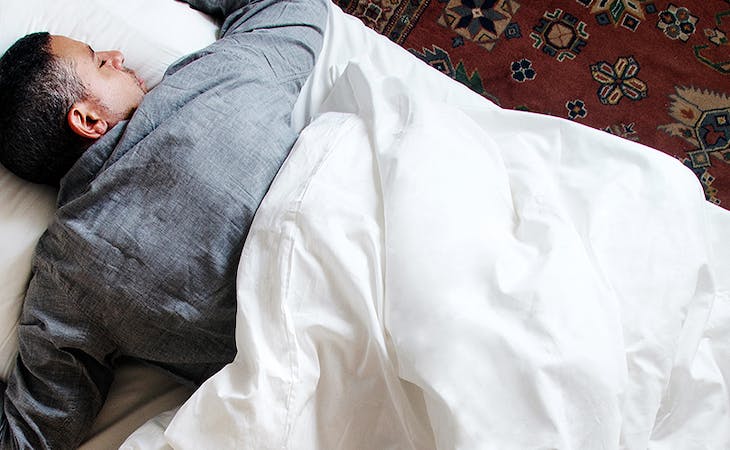
Anyone who sleeps on their stomach (and 7% of Americans do) has probably heard the warnings about back pain—or experienced some aches and soreness firsthand. While sleeping prone can help reduce snoring, stomach sleeping is less than ideal for spinal health.
That’s because we carry the bulk of our weight across the hips and belly, so sleeping on one’s stomach “affects the curvature of the spine and makes it hard for it to stay in a neutral position,” explains Michael Breus, PhD, a Los Angeles sleep specialist and author of Good Night: The Sleep Doctor’s 4-week Program to Better Sleep and Better Health. The result of that misalignment: chronic back and neck pain, especially since you likely sleep with your head turned to one side. We’re often asked what type of mattress is best for stomach sleepers. Below is everything stomach sleepers need to know to choose the top mattresses and beds for them.
Best mattress for stomach sleepers
Doctors encourage stomach sleepers to try to train themselves to adopt another sleep position, but if you can’t break the habit, it helps to choose a mattress that will mitigate some of the strain. Here are four features to help determine the best mattress for stomach sleepers.
| Sleeper profile | Firmness & pillow loft | Pressure-relief need | Support need | Materials to consider |
|---|---|---|---|---|
| Light sleepers (Under 130 lbs) | Mattress firmness: Medium-firm (4–5/10) Pillow loft: Ultra-thin or flat | Moderate give required to cushion the chest, ribs, and hip bones without pushing back harshly. | Gentle spinal elevation to keep lightweight hips level with shoulders without excessive sagging. | • Latex • Medium-firm memory foam • Hybrids with soft top layers |
| Average-weight sleepers (130–230 lbs) | Mattress firmness: Medium-firm to firm (5–7/10) Pillow loft: Very thin | Low to moderate pressure relief to avoid deep sinking through the midsection. | Strong core support to hold the midsection elevated and maintain neutral spinal alignment. | • Natural latex • Firm hybrids with pocketed coils • Innerspring with firm foam tops |
| Heavyweight sleepers (Over 230 lbs) | Mattress firmness: Firm to extra-firm (7–8+/10) Pillow loft: Ultra-thin or no pillow under head | Minimal surface sinkage needed; focus is on buoyant cushioning without belly dipping. | Maximum resistance and heavy-duty pushback to prevent deep pelvic sinkage and lumbar arching. | • High-density latex • Zoned lumbar hybrids • Heavy-gauge coil innersprings |
Alignment and pressure relief
Stomach sleepers face a delicate balancing act between proper spinal alignment and surface pressure. Because the heaviest part of the body is the midsection, a mattress that is too soft will cause the hips and pelvis to sink, throwing the spine out of a neutral position and straining the lower back. At the same time, the bed cannot be excessively rigid; otherwise, it will create uncomfortable pressure points against the ribs, pelvis, and stomach. The ideal mattress provides enough targeted support to keep the spine even and horizontal, while offering just enough gentle contouring or give to cushion the body without compromising posture.
Firmness
Firmness is a key consideration when choosing the best kind of mattress for stomach sleepers. Most stomach sleepers do best on a firm surface. That allows your body to maintain the best possible alignment while lying face-down, says Ben Trapskin, editor of mattress review site Sleep Sherpa. If the mattress is too soft, your stomach will pull your spine down into an exaggerated curve, especially if you already carry a lot of weight around your midsection. (Check out our article on the best mattress for heavy stomach sleepers, back sleepers, and side sleepers.)
But while firmer is better, be mindful that you can have too much of a good thing. An overly firm bed will put pressure on your ribs and stomach, making for an uncomfortable night. The best mattresses for stomach sleepers will fall between a four and seven on the typical firmness scale, says Breus. The more you weigh, the higher you should go in that range. Finding your sweet spot on the firmness scale is critical, especially when trying to find the best mattress for stomach sleepers with lower back pain. (Here are more tips for choosing the right mattress for your body type.)
Durability
When looking for the best mattress for stomach sleepers, this is one area where you don’t want to cut corners. Mattresses made with lesser quality materials are more likely to sag sooner, messing up your alignment and putting you at risk for back pain if you’re a stomach sleeper. When it comes to memory foam, factors that affect durability include the density of the foam (the higher the density, the longer it lasts), and the number and type of layers. For innerspring mattresses, pay close attention to the style and thickness of coils, as well as the type of foam used in the top comfort layer.
Contouring ability
Memory foam is known for molding to the shape of your body when you lie down, which is great for side and back sleepers but may not be ideal for stomach sleepers (especially heavier ones). With that said, if you’re a stomach sleeper and you like the body-hugging feel of memory foam, make sure to choose one that is firm enough to offer the necessary support. “You should get a sort of floating sensation,” says Trapskin, rather than a sinking one.
Latex, which contours like memory foam but has a naturally buoyant quality, is another good option. Here too, opt for firmer over softer. (Not familiar with latex mattresses? Here’s a rundown of the essentials.)
Comfort
Feeling hot is a common complaint among stomach sleepers. The catch here is that some of the denser memory foam mattresses that offer good support are also prone to retaining heat. The best mattresses for stomach sleepers are ones that offer cooling features, such as gel layers and a breathable outer cover. In the foam category, latex sleeps coolest, since natural latex has an open-cell structure that allows for plenty of air flow.
Now, a note on pillows. To keep your spine as straight as possible in a prone position, the National Sleep Foundation recommends using the thinnest type of pillow under your head—or even no pillow at all. Putting a thin pillow under your stomach and pelvis may also help to prevent back pain if you’re a stomach sleeper, says Breus. And don’t forget to stretch for a few minutes every morning, no matter how you sleep; it will help boost circulation to muscles after a night of slumber and get your spine back into shape.
Body weight and alignment
Body weight and mattress firmness work together to determine how much support and pressure relief a sleeper receives. For stomach sleepers, finding the right balance is especially critical because the torso carries the majority of the body’s weight.
Here is how body weight changes the recommendation for mattress firmness:
1. Light sleepers (under 130 lbs)
- Recommended firmness: Medium to medium-firm (~4 to 5 on a 10-point scale)
- Why: Lighter individuals exert less downward force on the mattress. If a bed is too firm, they won’t sink in enough to experience any cushioning, leading to harsh pressure points on the ribs, chest, and hip bones. A slightly softer, medium-firm feel allows just enough surface give for comfort while still keeping their light midsection elevated.
2. Average-weight sleepers (130 lbs – 230 lbs)
- Recommended firmness: Medium-firm to firm (~5 to 7 on a 10-point scale)
- Why: This is the standard target range for stomach sleepers. Average-weight sleepers press into the mattress enough that soft comfort layers will sag under their hips, pulling the lumbar spine into an unnatural arch. A medium-firm or firm mattress provides strong core pushback to maintain neutral spinal alignment without feeling uncomfortably rigid on the chest.
3. Heavy/higher-weight sleepers (over 230 lbs)
- Recommended firmness: Firm to extra-firm (~7 to 8+ on a 10-point scale)
- Why: Greater body weight exerts significantly more gravity on the center of the bed. To prevent deep sinkage through the pelvis—which causes immediate lower back strain—higher-weight stomach sleepers need dense support foams, heavy-duty coils, or targeted/zoned lumbar reinforcement. A firmer feel ensures the body stays lifted “on top of” the mattress rather than sinking into it.
Watch this video to learn more about how to choose the best mattress for stomach sleepers:
Best type of bed
Finally, we’re breaking down what features stomach sleepers should look for in a mattress, according to mattress type.
Memory foam
Memory foam typically isn’t the best option for stomach sleepers since it can contribute to sleeping hot. If you like the feel of memory foam, however, choose a mattress with cooling features, like graphite or gel. Make sure the memory foam mattress is firm, to help keep your spine in the best possible alignment while you’re lying face down. It’s also a good idea to pick a durable memory foam mattress. That’s because the shorter the lifespan of a mattress, the sooner it’ll begin to sag—and that’s not good for stomach sleepers, who need a lot of spinal support. The most durable memory foam has a density of 4 to 5 pounds per cubic foot.
Latex mattress
Latex is a good option for stomach sleepers since it’s naturally cool. Look for a mattress made with a natural latex support core. You should also choose a latex mattress with zoned lumbar support, which will help ensure your spine is kept in neutral alignment while you sleep. And as with memory foam, a firm comfort level is your best option as a stomach sleeper. (Learn how to make your mattress firmer.)
Hybrid
A hybrid mattress is a cross between two mattress types—typically innerspring and some sort of foam—for a “best of both worlds” sleeping experience. If you’re a stomach sleeper, look for a hybrid mattress with durable, individually wrapped coils that contour to your body. A firm comfort level, cooling features, and zoned lumbar support (if you decide on a latex hybrid), are all other good features for stomach sleepers.
Innerspring mattress
Thanks to the airflow between coils, innerspring mattresses sleep cool and are thus another good option for stomach sleepers. Just like with a hybrid mattress, look for an innerspring that has durable coils and a firm comfort level for the optimal sleep experience as a stomach sleeper.
Why stomach sleeping can be bad for health
As we’ve already mentioned, stomach sleeping can lead to misalignment of the spine, resulting in back and neck pain. But that’s not all. It may also perpetuate the discomfort of acid reflux and put pressure on certain organs. It can even cause wrinkles due to the friction that occurs between your skin and the pillowcase while you sleep. The bottom line: If possible, try sleeping on your back or side instead.
Our best mattresses for stomach sleepers
This carousel automatically rotates through products. Use the pause button to stop rotation, or use the slide dots to navigate.
Our flagship luxury mattress is expertly engineered with coil-on-coil construction for durability, a layer of memory foam for enhanced back support, and a cushiony Euro pillow top for extra comfort. This hybrid mattress combines the pressure-free support of natural latex with the classic innerspring feel. Handcrafted with pure materials for the ultimate in cool and healthy sleep. Natural latex responds to every curve for pressure-free support and responsive comfort. Natural latex is supple, resilient, and durable, for the ultimate in elevated sleep. (It’s naturally hypoallergenic too.)
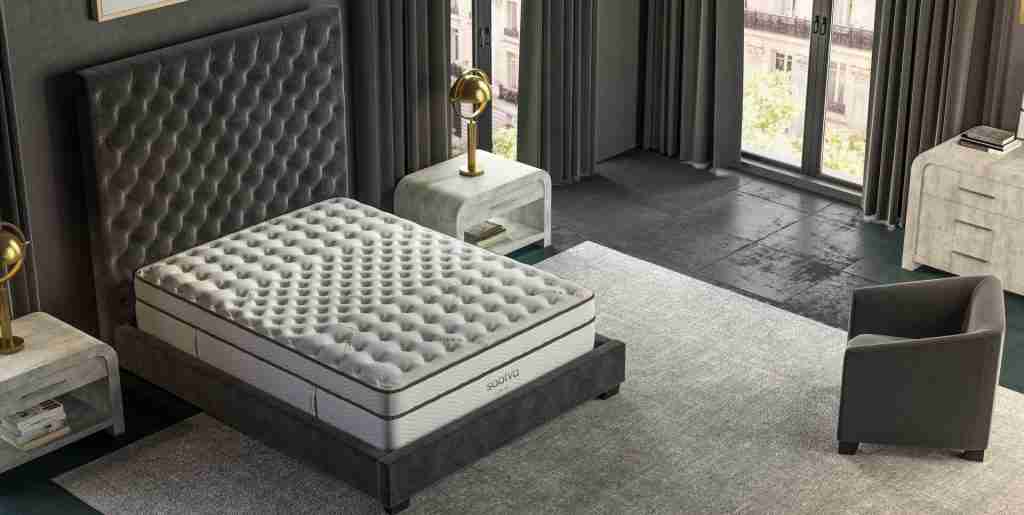 Saatva Classic Innerspring Mattress
Shop Now
 Latex Hybrid Mattress
Shop Now
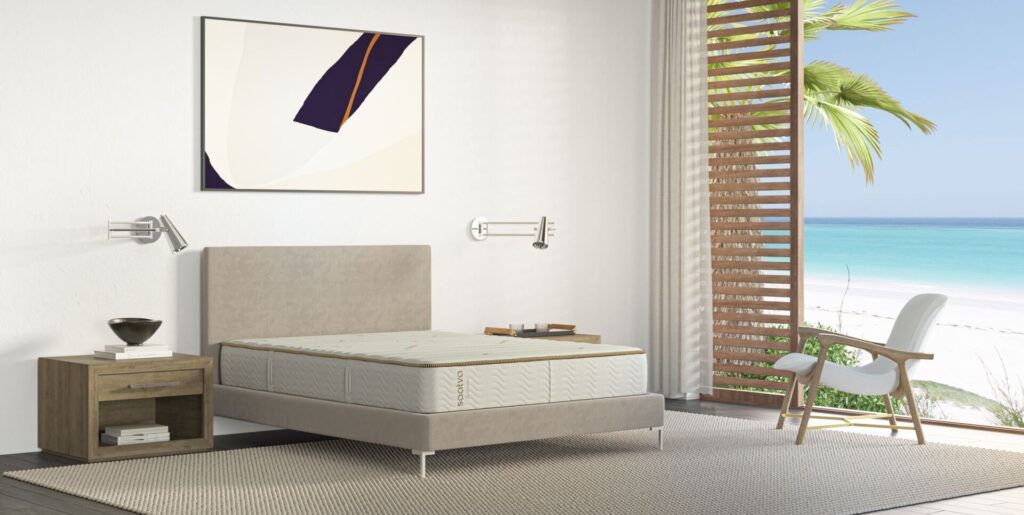 Zenhaven Latex Mattress
Shop Now
How to tell if your setup is wrong
Your mattress and pillow setup should work together to keep your spine neutral while you sleep. If your sleeping surface or pillow is not right for stomach sleeping, your body will let you know. Here are a few clear signs that your setup needs an upgrade:
- Morning lower back pain or stiffness: If you wake up with a dull ache in your lower back, your hips are likely sinking too deep into the mattress, forcing your spine into an exaggerated curve.
- Neck soreness and headache: A pillow that is too thick forces your neck to bend backward at an unnatural angle, putting severe tension on your upper neck muscles.
- Numbness or tingling in your arms: Pressure on your chest or improper neck alignment can restrict circulation or compress nerves, leading to a pins and needles feeling in your hands or arms.
- Restlessness and frequent tossing: Constant shifting during the night usually means your mattress is creating uncomfortable pressure points against your ribs, shoulders, or hips.
- Waking up feeling overheated: Trapped heat around your torso or head indicates your mattress or pillow lacks sufficient airflow and ventilation.
FAQs
What mattress type is best for stomach sleepers?
Latex, hybrid, and innerspring mattresses are the best types of mattresses for stomach sleepers as they provide durability, firm comfort levels, and zoned lumbar support.
What mattress firmness is best for stomach sleepers?
Stomach sleepers do best on firm surfaces as they allow your body to maintain the best possible alignment while lying face-down. The best firmness level will fall between a four and seven on the typical firmness scale, and the more you weigh, the higher you should go in that range.
How can I tell if my sleep setup is supportive enough?
Your head, neck, and spine should feel comfortably aligned without excessive pressure or deep sinkage. Persistent pain, numbness, or tingling should be evaluated by a healthcare professional rather than addressed only by changing bedding.
We’ve got more great mattress tips for choosing the best mattress for side sleepers and the best mattress for back sleepers too.

Hallie Levine
Hallie Levine is an award-winning journalist who has covered health and wellness for publications such as Consumer Reports, Health, Prevention, Time, Reader’s Digest, Parents, Good Housekeeping, and Redbook.
Related Stories
-
Can You Wear Compression Socks to Sleep?
-
 Are There Fleas in Your Bed? Here’s How to Tell (and What to Do About It)
-
 Can Ube Help You Sleep Better?
Table of Contents
