
 Can You Wear Compression Socks to Sleep?
Sleep Health, Mattress Types & Sizes, Mattresses, Sleep Tips
September 23, 2020, updated on October 12, 2026
How to Choose a Hybrid Mattress for Side Sleepers
Written by John-Manuel Andriote

Key Takeaways:
- Side sleepers need a mattress that cushions heavy pressure points like the shoulders and hips while maintaining neutral spinal alignment to prevent soreness.
-
Hybrid mattresses blend responsive coil systems with top comfort layers (foam or latex) to keep side sleepers supported without the “stuck” feeling of all-foam beds.
-
Body weight determines how deeply you sink—lighter side sleepers require a plush surface for sufficient give, while heavier individuals need firmer support to protect spinal posture.
A hybrid mattress can work especially well for side sleepers because it combines cushioning comfort layers with a supportive coil core. Prioritize pressure relief around the shoulders and hips, a medium to medium-firm feel for many sleepers, and zoned or reinforced support that helps keep the spine aligned. Hot sleepers may also benefit from the airflow created by the coil system.
Innerspring mattresses have come a long way from the days when the springs inside were notorious for popping through the mattress’s outer covering. Nearly all of them on the market today feature a layer of cushiony memory foam or latex for added pressure relief and comfort. Because these mattresses combine springs and foam for a “best of both worlds” sleep experience, they’re often referred to as hybrid mattresses.
But the right hybrid mattress for you may not be the best choice for someone else. If you sleep mainly on your side and are interested in trying a hybrid mattress, there are a few things to consider in deciding for yourself: Are hybrid mattresses good for side sleepers?
Here, learn about the benefits of a hybrid mattress and how to choose the best hybrid for side sleepers.
What is a hybrid mattress?
Technically, a hybrid mattress can be any mattress made from more than one material. But, as Better Sleep Council board member and director of mattress education Mary Helen Rogers explains, the term “hybrid mattress” is most often associated with innerspring mattresses that contain a coil support system along with another material, such as memory foam.
This combination of traditional coil support with the contouring comfort of foam is what gives a hybrid bed mattress its appeal. “Many will say that hybrids bring the best of both worlds together,” says Rogers.
Of course, the specific feel of any individual hybrid mattress depends on the type of materials inside it. But it will usually be different from what you feel if you lie on a traditional innerspring or a pure foam mattress, explains Mark Kinsley, vice president of marketing for the Bedding Group at Leggett & Platt, a company that manufactures bedding components (including some of the materials used in Saatva mattresses).
Initially, you’ll experience the soft feeling that foam provides. But you’ll also feel reinforced support from the coils, making it easier to move around and change sleeping positions than on an all-foam mattress. Kinsley says the foam-spring combination makes you feel more elevated and buoyant—instead of sinking, as you would on an all-foam mattress.
Hybrid spring-foam mattresses also tend to sleep cooler than all-foam mattresses, because more air can circulate through the springs than is be able to circulate through foam layers. (Learn about nontoxic mattresses so you can find the healthiest hybrid mattress for you.)
Benefits of a hybrid mattress
These are the top benefits of sleeping on a hybrid mattress if you’re a side sleeper:
Ensures a cool night’s sleep
You get airflow from the coils, and even more cooling if you choose a hybrid with a layer of natural latex. If you decide on a hybrid mattress with a memory foam comfort layer, look for one infused with cooling gel or graphite, as traditional memory foam tends to sleep hot.
Reduces motion transfer
The added layer of foam on top of the mattress helps reduce the sensation that you’re riding a wave as your sleep partner moves around in the middle of the night—and likewise, if you’re the one who moves.
Provides excellent support for side sleepers
The top foam layer provides pressure relief under shoulders and hips, making it an ideal choice for side sleepers by keeping your spine properly aligned while you sleep.
Find the perfect hybrid mattress for side sleepers at Saatva
This carousel automatically rotates through products. Use the pause button to stop rotation, or use the slide dots to navigate.
Our flagship luxury mattress is expertly engineered with coil-on-coil construction for durability, a layer of memory foam for enhanced back support, and a cushiony Euro pillow top for extra comfort. This hybrid mattress combines the pressure-free support of natural latex with the classic innerspring feel. Handcrafted with pure materials for the ultimate in cool and healthy sleep. This memory foam hybrid mattress features the perfect balance of body-contouring and responsive feel. Enjoy the innovative cooling system, which prevents overheating.
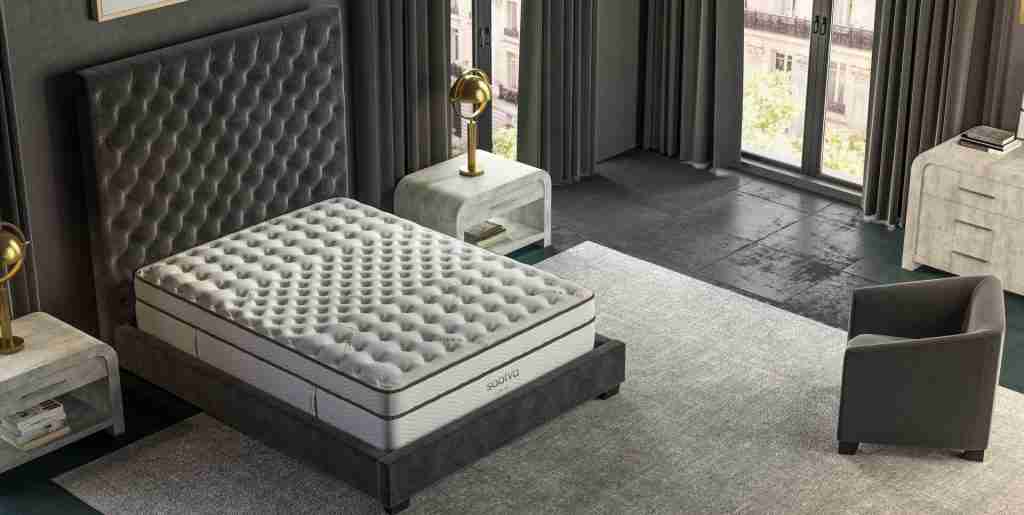 Saatva Classic Innerspring Mattress
Shop Now
 Latex Hybrid Mattress
Shop Now
 Memory Foam Hybrid Mattress
Shop Now
| Feature / Category | Recommendation for Hybrid Side Sleepers | Why It Matters |
|---|---|---|
| Mattress Firmness | Medium-Soft to Medium (Plush) | Cradles hips and shoulders to eliminate pressure points while allowing coils to support spinal alignment. |
| Materials & Comfort Layers | Memory Foam, Gel-Infused Foam, or Natural Latex | Foam/latex delivers deep pressure relief and motion isolation, while gel or natural latex prevents heat retention. |
| Support System & Features | Individually Wrapped Coils + Lumbar Support | Pocketed coils isolate movement and enhance airflow; reinforced lumbar support keeps midsection hips from sagging. |
| Pillow Features | Medium-High Loft Head Pillow + Knee/Body Pillow | Bridges the shoulder-to-head distance and keeps pelvic/hip alignment neutral throughout the night. |
Best hybrid mattress for side sleepers
Keep in mind that no one mattress is “best” for any particular sleep style. Generally speaking, though, the best hybrid mattress for side sleepers will conform to your body’s natural curves and take the pressure off your hips and shoulders. When your spine is properly aligned, your muscles can relax for the most restorative night’s sleep.
Alignment and pressure relief
Side sleepers need targeted pressure relief at their widest points—the shoulders and hips—along with sufficient support to keep the spine straight and level.
- Slightly softer comfort level: As a side sleeper, you need a hybrid mattress that is soft (or “plush”) enough to cradle your hips and shoulders while supporting your spine in a neutral position. A too-firm hybrid mattress will cut off circulation to your hips, shoulders, and neck, leaving you with aches and pains.
- Added lumbar support: Lumbar support is one of the most important features to look for in a hybrid mattress if you’re a side sleeper. Lumbar support will ensure your spine is kept in neutral alignment while you sleep. A memory foam hybrid mattress will include added lumbar support from denser foams or gels in the center third of the mattress. In a latex hybrid mattress lumbar support is often referred to as “zoned” support. This means the mattress has firmer foams in the center third.
Body weight and firmness selection
Your body weight dictates how far you sink into the mattress layers, directly influencing the firmness level required to balance comfort and alignment:
- Lightweight sleepers (< 130 lbs): Benefit from a softer/plush comfort level so their hips and shoulders sink in enough to relieve pressure points.
- Average weight sleepers (130–230 lbs): Typically thrive on a medium to medium-soft hybrid that balances plush contouring with core support.
- Heavier sleepers (> 230 lbs): Need a slightly firmer hybrid surface or reinforced coil structure to prevent excessive midsection sinkage and preserve neutral spine geometry.
Temperature regulation and airflow
Hybrid mattresses naturally sleep cooler than traditional all-foam beds because the internal spring base acts as a ventilation chamber. Air circulates freely around the pocketed coils, dispersing body heat and humidity, while gel-infused memory foam or naturally breathable latex comfort layers actively pull heat away from the body throughout the night.
Motion isolation and comfort for couples
For partners sharing a bed, a hybrid mattress delivers the ideal compromise between motion containment and ease of movement:
- Individually wrapped coils: The best hybrid mattresses feature individually wrapped coils, which move independently and reduce motion transfer. (The Saatva Classic includes a “coil on coil” system: a base support layer of tempered steel coils, plus another layer of individually wrapped coils in the top portion of the mattress.) This pocketed spring structure absorbs movement so tossing and turning on one side won’t disturb a partner on the other.
FAQs
Does body weight change the recommendation?
Yes. Body weight affects how deeply you sink into a mattress or pillow, so the same firmness or loft can feel different from person to person. Use general sleep-position guidance as a starting point, then adjust for body type and comfort.
How can I tell if my sleep setup is supportive enough?
Your head, neck, and spine should feel comfortably aligned without excessive pressure or deep sinkage. Persistent pain, numbness, or tingling should be evaluated by a healthcare professional rather than addressed only by changing bedding.
How to tell if your setup is wrong
- If your mattress or pillow isn’t properly suited for side sleeping, your body will let you know. Use this quick checklist to spot the warning signs:
Waking up with numb, tingling, or sore shoulders and hips? Your mattress is too firm. It’s compressing joint tissues and restricting blood circulation at pressure points. - Experiencing lower back stiffness or deep hip sag when waking up? Your mattress is too soft or lacks center lumbar support, causing your spine to bow in a hammock-like curve.
- Waking up with neck strain, stiffness, or tension headaches? Your head pillow height (loft) is wrong. A pillow that is too flat or too thick bends your cervical spine out of alignment.
- Constantly tossing, turning, or sleeping with an arm tucked under your pillow? Your pillow isn’t high enough to fill the neck-to-shoulder gap, or your bed creates uncomfortable pressure spots.
- Feeling pelvic twist, hip friction, or lower back aching by morning? You’re missing lower body support. Sleeping without a knee or body pillow allows your top leg to fall forward, pulling your lower spine out of alignment.
Still trying to decide if a hybrid mattress is right for you? Here’s how it compares to other mattress types:

John-Manuel Andriote
John-Manuel Andriote began writing about health and medicine while working on a master’s degree in journalism at Northwestern University in the mid-1980s. He is the author of six books, including an award-winning history of the HIV-AIDS pandemic, a book focused on building resilience, and a “fable for kids ages 5 to 105” based on the true story of a runaway cow in Andriote’s home state of Connecticut. He has contributed articles to newspapers and magazines ranging from The Atlantic to The Washington Post. He writes the “Stonewall Strong” blog focused on resilience for Psychology Today. Andriote since August 2021 has been the senior writer for Winship Cancer Institute of Emory University, in Atlanta, Georgia.
Related Stories
-
Can You Wear Compression Socks to Sleep?
-
 Are There Fleas in Your Bed? Here’s How to Tell (and What to Do About It)
-
 Can Ube Help You Sleep Better?
Table of Contents
