
 Best Labor Day Mattress Sales of 2026
Mattresses, Mattress Buying Guides
March 18, 2019, updated on October 13, 2026
The Best Latex Mattress for Your Sleep Position
Written by John-Manuel Andriote

Key Takeaways
Latex combines bouncy, pressure-relieving support with cool open-cell breathability, effective motion isolation for couples, and long-lasting durability.
Side sleepers need cushioned give for hips and shoulders; back sleepers need balanced support for natural spinal curves; stomach sleepers need firmness to keep hips from sinking and misaligning the spine.
Lighter sleepers (<130 lbs) need softer surfaces to contour, average-weight sleepers fit medium-firm, and heavier sleepers need firmer support to prevent deep sinking.
The best latex mattress for your sleep position is best understood by focusing on the practical factors that affect comfort, support, durability, and sleep quality. Evaluate the materials, construction, fit for your sleep position and body type, care requirements, and any relevant health considerations. Use measurable criteria and current expert guidance rather than relying on a single marketing claim or trend.
You’ve researched your options and decided that a latex mattress is the right type of mattress for you. Good choice! Latex mattresses have quite a few things going for them. For starters, they’re extremely durable, with a lifespan that typically outlasts innerspring and even memory foam mattresses. Latex is excellent at relieving pressure on muscles and joints, sleeps cool, and is naturally resistant to mold and dust mites. Plus, natural latex is eco-friendly and sustainable, sourced from the sap of the rubber tree. (Learn more about the benefits of sleeping on latex here.)
Regardless of material, the key to comfort for any mattress is matching the mattress to your sleep style. The goal is to keep your spine properly aligned throughout the night, so you wake up feeling rested and refreshed, not stiff or achy. Here’s what you need to know about latex, whether you sleep on your side, back, stomach, or some combination.
Body weight and alignment
If you’re a side sleeper
Most people—70% of Americans, according to the National Sleep Foundation—sleep on their side. Side-sleeping puts pressure on the hips, shoulders, and neck. An overly firm mattress can cut off circulation and lead to numbness or tingling, which is why side sleepers do best with a more resilient surface that allows for some “sinking in” and cushions sensitive joints.
Why a latex mattress is a good choice for side sleepers: With its natural buoyancy, latex provides a good level of “give” for side sleepers. That promotes better blood flow and prevents numbness. At the same time, its ability to conform to each curve of the body means a side sleeper gets the support for hips and shoulders that keeps the spine in a neutral alignment.
If you’re a back sleeper
It’s estimated that 10% to 20% of people prefer to sleep on their back. Back-sleeping is considered the healthiest sleep style because the body tends to remain in a natural, relaxed position. That means less contorting of arms, legs, spine. Also, by slightly elevating the esophagus relative to the stomach, back sleeping can sometimes reduce acid reflux. On the downside, back sleeping can increase snoring and the risk for obstructive sleep apnea.
For back sleepers, a mattress’s firmness and contourability are key to comfort. Back sleepers are lucky—they can enjoy a range of firmness options—but it’s best to avoid a mattress that is either too firm or too soft. “When it’s too soft, it doesn’t provide enough support, which causes you to sink into the bed,” says Michael Breus, PhD, a Los Angeles sleep disorder specialist and author of Good Night: The Sleep Doctor’s 4-Week Program to Better Sleep and Better Health.
An overly firm mattress can be just as bad, particularly for women. “Most of us carry our weight through our pelvis, which in women can be tilted due to childbirth,” Breus explains. That means a mattress with a bit of give will likely be most comfortable for your lower half. For all back sleepers, weight is another factor to consider. If you’re of lighter weight (below 130 pounds), you’ll want something softer. If you’re of average weight, a medium-firm mattress should suit you. A slightly firmer mattress will likely better suit you if you’re heavier.
Why a latex mattress is a good choice for back sleepers: A latex mattress easily meets the first requirement for back sleepers: support. Its blend of cradling and buoyancy is why medical experts often recommend latex mattresses for people who are back sleepers and also have chronic back pain. By conforming to the body, it relieves pressure on the back and shoulders, while also supporting the natural curvature of the spine.
If you’re a stomach sleeper
The least common sleep style—only 7% of Americans sleep this way—stomach sleeping presents the biggest challenges for spinal health. Because we carry most of our weight across the hips and belly, sleeping on one’s stomach makes it hard to stay comfortable, as that weight pulls down on the spine.
Sleeping on your stomach “affects the curvature of the spine and makes it hard for it to stay in a neutral position,” says Breus. The result of that misalignment can be chronic back and neck pain, especially if you also sleep with your head cranked completely to one side. A medium to slightly firmer mattress will best support your stomach-sleeping body in neutral alignment and keep you from waking up with a sore back.
Why a latex mattress is a good choice for stomach sleepers: In addition to its natural buoyancy, which creates a sensation of floating on top of the mattress rather than sinking into the surface, a latex mattress is also a good choice for stomach sleepers because of its temperature neutrality. Sleeping hot is a common complaint among the stomach crowd. Because of its open-cell structure, latex sleeps cooler than other types of foam.
Our best latex mattresses for every sleep position
This carousel automatically rotates through products. Use the pause button to stop rotation, or use the slide dots to navigate.
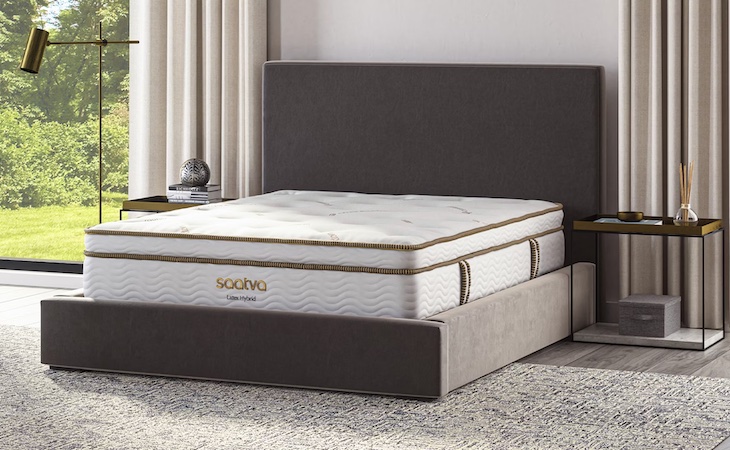
Natural latex responds to every curve for pressure-free support and responsive comfort. Natural latex is supple, resilient, and durable, for the ultimate in elevated sleep. (It’s naturally hypoallergenic too.) This hybrid mattress combines the pressure-free support of natural latex with the classic innerspring feel. Handcrafted with pure materials for the ultimate in cool and healthy sleep.
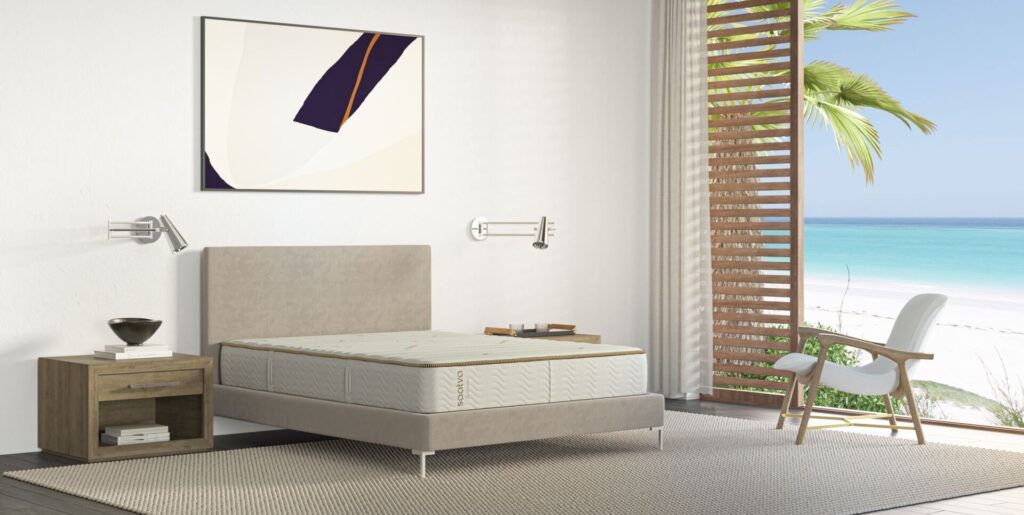 Zenhaven Latex Mattress
Shop Now
 Latex Hybrid Mattress
Shop Now
The best latex mattress for couples
Sleeping with a partner adds another layer of mattress considerations. Now you have to think about two people’s sleep styles and preferences. (That’s why a medium-firm mattress is a good choice for couples with different sleep styles.) One of the biggest issues for couples is motion transfer—getting jostled and having your sleep disturbed whenever your partner moves around in bed or gets up during the night.
Why a latex mattress is a good choice if you share a bed: Latex mattresses, like memory foam mattresses, are a good option for people who share a bed because their stability isolates motion, which means each partner can shift around during sleep without disturbing the other.
| Sleep Position | Recommended Firmness | Key Material Features | Recommended Pillow & Mattress Features |
|---|---|---|---|
| Side Sleeper | Soft to Medium (Softer if <130 lbs) | Buoyant latex with good “give”; contouring memory foam | Mattress: Deep pressure relief for shoulders & hips Pillow: High loft / thicker pillow to fill neck gap |
| Back Sleeper | Medium-Firm (Softer if <130 lbs, firmer if >230 lbs) | Balanced latex blend; responsive hybrid coils | Mattress: Lumbar support to preserve spinal curve Pillow: Medium loft to align head without forward tilt |
| Stomach Sleeper | Medium-Firm to Firm | High-density latex or firm pocketed coils | Mattress: Firm surface to keep hips elevated and aligned Pillow: Low loft or flat pillow (or no pillow) |
FAQs
Does body weight change the recommendation?
Yes. Body weight affects how deeply you sink into a mattress or pillow, so the same firmness or loft can feel different from person to person. Use general sleep-position guidance as a starting point, then adjust for body type and comfort.
How can I tell if my sleep setup is supportive enough?
Your head, neck, and spine should feel comfortably aligned without excessive pressure or deep sinkage. Persistent pain, numbness, or tingling should be evaluated by a healthcare professional rather than addressed only by changing bedding.
How to tell if your setup is wrong
Mattress Too Firm: You wake up with numbness or tingling in your arms/hands (especially side sleepers), or feel sharp pressure on your hips and shoulders.
Mattress Too Soft: You wake up with lower back stiffness, feeling as though your hips sank too deeply into the mattress (especially back and stomach sleepers).
Pillow Too High: Your head is pushed unnaturally forward (back sleepers) or cranked upward (side sleepers), causing morning neck pain or tension headaches.
Pillow Too Flat: Your neck slumps toward the mattress without support, causing neck stiffness or throwing your upper spine out of alignment.
The bottom line
A latex mattress is a smart choice, no matter your sleep style. Latex typically costs more than other mattress types, but it also lasts considerably longer than the others, too. A latex mattress can also act as a great mattress for insomnia. As always, knowing what will work best with your sleep style, and why, will help you choose the mattress that will give you the best possible sleep.
Learn more about latex:

John-Manuel Andriote
John-Manuel Andriote began writing about health and medicine while working on a master’s degree in journalism at Northwestern University in the mid-1980s. He is the author of six books, including an award-winning history of the HIV-AIDS pandemic, a book focused on building resilience, and a “fable for kids ages 5 to 105” based on the true story of a runaway cow in Andriote’s home state of Connecticut. He has contributed articles to newspapers and magazines ranging from The Atlantic to The Washington Post. He writes the “Stonewall Strong” blog focused on resilience for Psychology Today. Andriote since August 2021 has been the senior writer for Winship Cancer Institute of Emory University, in Atlanta, Georgia.
Related Stories
-
Best Labor Day Mattress Sales of 2026
-
 Best July 4th Mattress Sales of 2026
-
 Best Memorial Day Mattress Sales of 2026
Table of Contents
