
 Tips and Tricks for Putting a Comforter in a Duvet Cover
Bedding, Mattress Pads & Toppers
July 9, 2020, updated on October 15, 2026
Memory Foam Mattress Toppers: A Buyer’s Guide
Written by Tanya Slavin
Key Takeaways
A memory foam mattress topper adds 1–3 inches of plushness, pressure relief, or motion isolation, but requires a sturdy mattress underneath (it won’t fix structural sagging).
Traditional foam traps heat, so hot sleepers should opt for open-cell, gel-infused, or graphite-infused options.
Memory foam toppers are ideal for isolating partner movement and soothing joint/body pain from chronic conditions or injuries.
When choosing memory foam mattress toppers, focus first on fit for your body and sleep needs rather than marketing claims. Compare materials, support, comfort or firmness, temperature regulation, durability, care requirements, trial or return terms, and total cost. The best option is the one that solves the specific problem you are shopping for while remaining comfortable and practical over time.
What is a memory foam mattress topper, and why would you need one? The primary goal of a memory foam mattress topper is to improve your comfort so you don’t have to go out and buy a new mattress.
While mattress toppers can be made from a variety of materials, memory foam bed toppers are some of the most common on the market—and for good reason. Here’s what you need to know before buying one.
What is a memory foam mattress topper?
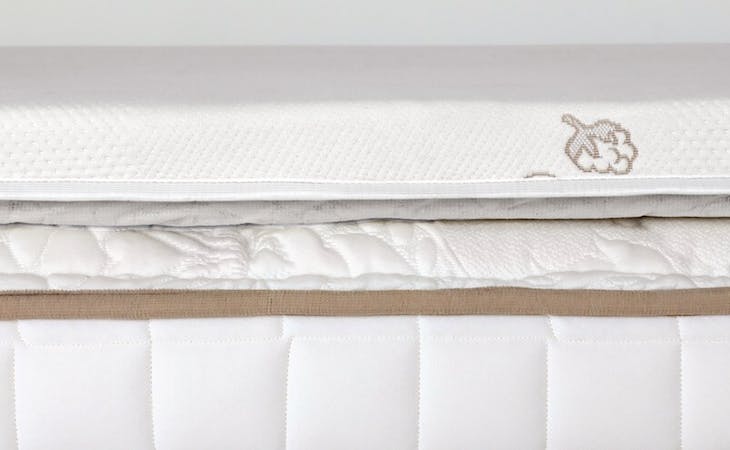
A memory foam topper, also sometimes referred to as a memory foam pad, is a layer of memory foam, usually 1-3 inches thick, that covers the entire surface of your bed. The purpose of a memory foam topper is to make you more comfortable than you would be sleeping on a mattress alone.
For example, you could use one if your mattress is too soft or too firm for you or if it’s become uneven but you’re not ready to buy a new one yet. These toppers are also a perfect solution for people who have a temporary need for a softer sleep surface due to an injury. The topper’s extra layer of foam helps relieve pressure points, with the mattress underneath providing structure and support.
Memory foam mattress topper buyer’s checklist
Work through these steps to determine the right memory foam topper for your specific sleep needs before making a purchase.
1. Assess your current mattress condition
- Is your mattress sagging? If yes, note that a topper will not fix structural sagging; consider replacing the mattress instead.
- Is your mattress too hard or too soft? Determine whether you need a plush layer to cushion a hard surface or a firmer layer to add temporary support.
- Are you breaking in a new mattress? A topper can help soften the break-in phase during the first few months.
2. Evaluate your body and sleep needs
- Do you have pain or injuries? Look for body-contouring pressure relief to soothe joint points and align the spine.
- Do you sleep with a partner? Prioritize memory foam’s motion isolation so movement won’t wake you up.
3. Choose the right material type
- Traditional memory foam: Ideal for maximum cradling/hug (but tends to trap heat).
- Open-cell memory foam: Better airflow and lower density to keep you cool.
- Gel-infused memory foam: Microbeads wick heat away while contouring to your body.
- Graphite-infused memory foam: Graphite layer active draws heat away to prevent night sweats.
- Polyurethane (Polyfoam): Faster bounce-back for sleepers who dislike the slow viscoelastic “melt.”
4. Check temperature and sensitivity factors
- Do you sleep hot? Avoid traditional foam; select Gel, Open-Cell, or Graphite options.
- Are you sensitive to chemical smells? Choose eco-friendly or plant-based foam to minimize off-gassing.
| Decision Criterion | What to Consider & Look For | Best Option / Recommendation |
|---|---|---|
| Body & Sleep Needs (Fit) | Specific problem to solve: chronic pain, arthritis, temporary injury, or partner movement causing disruptions. | Select a topper that provides pressure relief, body-contouring, and high motion isolation to align with your personal sleep habits. |
| Material Type | • Traditional Foam: Classic cradling and pressure relief. • Open-Cell Foam: Lower density, higher airflow. • Gel-Infused Foam: Microbeads wick away heat. • Graphite-Infused Foam: Graphite layer draws heat away. • Polyurethane (Polyfoam): Faster bounce-back, lacks viscoelastic “melt.” | • Choose Open-Cell, Gel, or Graphite for heat regulation. • Choose Polyfoam if you dislike the deep sink/hug and prefer quicker responsiveness. |
| Support & Spinal Alignment | Sufficient thickness (typically 1–3 inches) and density to support proper spinal posture and relieve joint pressure points. | Ensure your underlying mattress still provides basic structural integrity (note: toppers cannot fix a sagging mattress). |
| Comfort & Firmness | Adjusting mattress feel (e.g., adding plushness to a firm bed, adding structure to a soft bed, or easing the break-in period of a new mattress). | Choose a soft topper to cushion a hard surface, or a firmer topper to add temporary stability to a soft mattress. |
| Temperature Regulation | Risk of heat retention or waking up sweating due to foam density. | Avoid traditional memory foam if you sleep hot. Opt for gel-infused, open-cell, or graphite-infused options instead. |
| Odor & Off-Gassing (Care) | Sensitivity to chemical odors (“new mattress smell”) upon unboxing. | Look for eco-friendly or plant-based foam formulations to minimize chemical off-gassing. |
| Durability & Total Cost | Cost-effective alternative to replacing an entire mattress; longevity over time. | Use a topper to extend the life of an aging bed or buffer a new bed during its break-in phase rather than making a full mattress purchase right away. |
Different types of memory foam pads
There are several types of memory foam used in mattress toppers. Here are the most common you’ll find:
- Traditional memory foam was first introduced in the market in the mid-1990s and is designed to provide cradling support and pressure relief. Traditional memory foam, however, is known to sleep hot.
- Open-cell memory foam is a newer and more common type of memory foam today. It’s less dense than traditional memory foam—which means it provides better airflow and reduces the amount of heat retention, keeping you cooler at night.
- Gel memory foam is a memory foam that has been infused with tiny gel microbeads. The gel beads wick away heat, keeping you cool at night, while still providing the contouring properties of memory foam.
- Graphite-infused memory foam has a layer of graphite that draws heat away from your body. It has the same pressure-relieving properties as other types of memory foam but won’t make you wake up sweating.
- Polyurethane foam, also called polyfoam, is very similar structurally to memory foam. The difference is that it lacks the viscoelastic properties that make memory foam “melt” under your body heat and conform to your body shape. While that might be a disadvantage to some, it might appeal to people who prefer a quicker bounce-back when releasing pressure.
Improve your sleep with a memory foam mattress topper from Saatva
This carousel automatically rotates through products. Use the pause button to stop rotation, or use the slide dots to navigate.
The latest in high-tech cooling. The contouring support of memory foam, plus the advanced heat-dissipating properties of graphite.
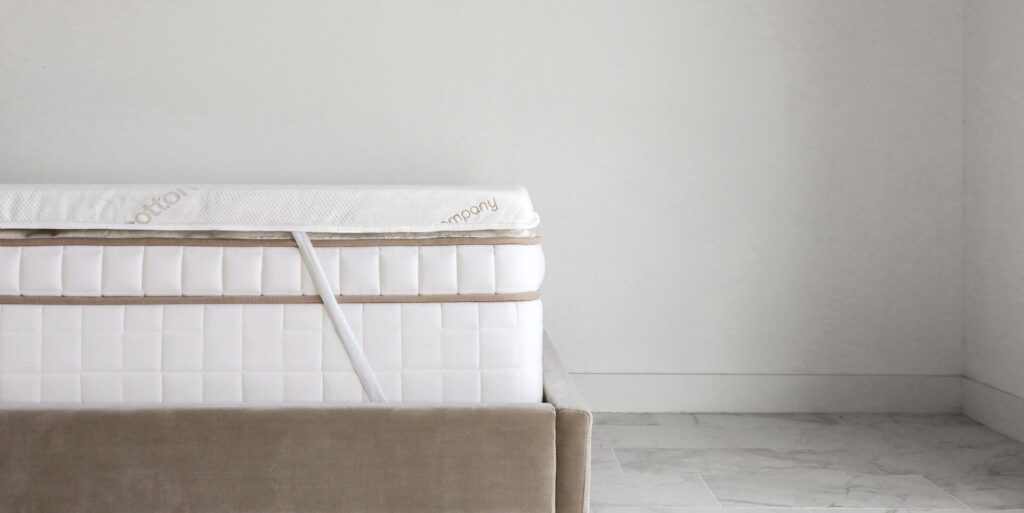 Graphite Memory Foam Mattress Topper
Shop Now
Benefits of memory foam mattress toppers
There are numerous benefits you’ll get from sleeping on a memory foam mattress topper. Here are the biggest ones:
- It prolongs the life of an old mattress. For example, if your mattress has gone soft, a firmer mattress topper may help make it more comfortable for a bit longer. (Keep in mind, though, that a mattress topper will not fix a sagging mattress).
- It can add a layer of cushiness if your mattress feels too firm. If your mattress is too hard, you don’t necessarily have to go out and buy a new one—just add a softer mattress topper to your bed.
- It relieves pressure points and promotes proper spinal alignment, which is particularly important for people with chronic pain, a temporary injury, or conditions like arthritis or fibromyalgia.
- If you sleep too hot or too cold, choosing the right mattress topper may help regulate your body temperature.
- If you tend to wake up at night when your partner moves around in bed, a good memory foam bed topper can eliminate the problem of motion transfer.
- It can ease the “break-in period” of a new mattress. It can take a few months to fully break in a new mattress, and a memory foam topper can help make your new bed more comfortable in the interim.
Disadvantages of memory foam mattress toppers
With all their benefits, some types of memory foam are not without their drawbacks. Keep these in mind when you choose yours:
- Traditional memory foam sleeps hot, so it might not be the best option for people who get warm overnight. Instead, if you want to get the benefits of sleeping on memory foam, look for gel or graphite-infused memory foam topper.
- Some memory foams off-gas, leaving you with that new mattress smell sometimes for quite a while. If you’re sensitive to smells, it’s important to look for eco-friendly foams that use plant-based ingredients as this can ensure you won’t get that odor.
Who it helps
Why get one? A memory foam topper adds 1–3 inches of cradling support to improve overall comfort, relieve pressure points, and extend the lifespan of an existing bed without the heavy cost of a brand-new mattress.
Who it helps most:
- People with pain or injuries: Alleviates pressure on joints, hips, and back (great for arthritis, fibromyalgia, or temporary injury recovery).
- Firm mattress owners: Adds a soft, plush cushion to beds that feel too hard.
- Light sleepers & couples: Eliminates motion transfer so movement from a partner won’t wake you.
- People breaking in a new bed: Softens the initial adjustment period of a new mattress.
- Budget-conscious sleepers: Delays expensive mattress replacement on beds that are firm or slightly worn (Note: will not fix a sagging mattress).
FAQs
What is the main purpose of a memory foam topper? A memory foam topper adds 1–3 inches of comfort/pressure relief without needing a full mattress replacement.
What is the most important thing to consider before buying?
Start with the problem you need the product to solve, then compare support, comfort, materials, durability, care requirements, and return or trial terms. Avoid choosing on a single marketing feature alone.

Tanya Slavin
Tanya Slavin is a freelance writer with a PhD in Linguistics. When she has had enough sleep, she learns languages and writes about it in her newsletter Friends with Words which documents her journey to learn 12 languages in 12 months.
Related Stories
-
Tips and Tricks for Putting a Comforter in a Duvet Cover
-
 Best Cyber Monday Bedding, Pajamas, and Tech Deals of 2025
-
 Best Black Friday Bedding Deals of 2025
Table of Contents
