
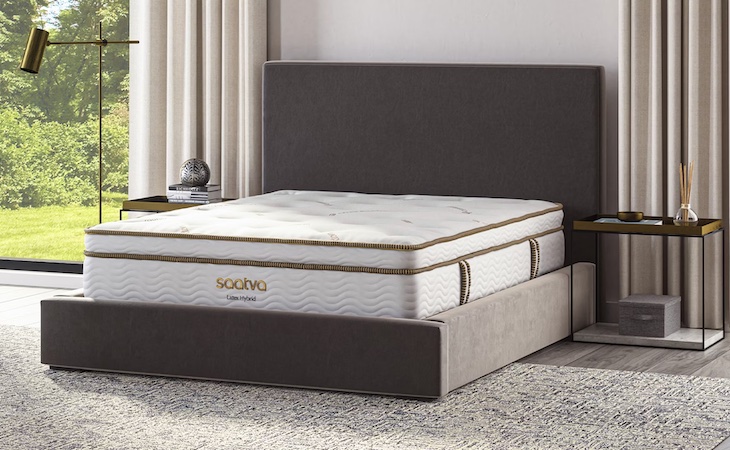
 Best Labor Day Mattress Sales of 2026
Mattresses, Mattress Buying Guides
June 24, 2019, updated on October 19, 2026
The Best Mattress for Combination Sleepers
Written by John-Manuel Andriote

Key Takeaways
Selecting the right mattress for combination sleepers involves considering contouring ability, ease of movement, firmness, and motion isolation.
A hybrid or latex mattress may be suitable for combination sleepers, while an adjustable air mattress can accommodate different sleep positions.
Lighter sleepers need softer surfaces to get adequate pressure relief, while heavier sleepers require firmer, high-density support to prevent hip sagging.
Combination sleepers need a mattress that makes it easy to change positions while providing balanced support in each one. Prioritize responsive materials, strong overall support, moderate contouring, and a firmness level that does not feel excessively soft or rigid. Motion isolation may also matter for couples if position changes tend to disturb a partner.
Matching your mattress to your sleep position isn’t all that complicated if you stay in one position all night. But what if you, like many people, shift during sleep from your side to your back to your stomach and back again? What does a “combination sleeper” need to look for in a mattress?
The best mattress for combination sleepers
| Firmness / Weight Guide | Recommended Materials | Key Pillow & Mattress Features |
|---|---|---|
| Soft: For sleepers weighing 100–120 lbs | Memory foam, Latex, Adjustable air | High responsiveness and contouring ability to cushion shoulders and hips |
| Medium-Firm: For sleepers weighing 120–250 lbs | Hybrid (innerspring + memory foam), Latex | Lumbar support for back sleeping and firm surface for stomach sleeping |
| Firm: For sleepers over 250 lbs | Adjustable air, High-density support layers | Resilience for easy movement without sinking in too far |
Here’s what to consider when selecting a mattress for a combination sleeper:
Contouring ability
Combination sleepers need a high level of responsiveness in a mattress. It has to compress in proportion to your weight and contour to your body in different positions. To maintain healthy (neutral) spinal alignment, you will want a mattress that:
- Supports your lumbar region when you are on your back.
- Cushions your shoulders and hips when you are on your side.
- Stays firm when you are on your stomach.
You might like: A hybrid mattress. An innerspring mattress topped with a memory foam comfort layer will contour to your body without making you feel like you’re sinking too far into the bed. You can also add a foam mattress topper to an innerspring mattress for extra cushioning.
Ease of movement
Because combination sleepers shift around during sleep, it’s important to choose a mattress that allows for easy movement. A material with more resilience—meaning it quickly returns to its original shape when you shift weight from one spot to another—performs well on this score.
You might like: A latex bed. Like memory foam, latex provides some contouring, but you’ll feel like you’re “floating” on top of the mattress rather than sinking into it. The combination of cradling and resiliency is why medical experts often recommend latex mattresses for people with back pain.
Firmness
If you’re a combination sleeper, your weight and size should factor into your decision. Simply put, the heavier you are, the firmer the mattress you need. The lighter you are, the softer it should be. A good guideline is that if you weigh 100 to 120 pounds, a soft mattress is best; if you weigh 120 to 250 pounds, a medium-firm is best; and if you are over 250 pounds, a firm mattress is best. (Here’s what to look for in a mattress if you’re over 250 pounds.)
You might like: An adjustable air mattress. This type of mattress will allow you to vary the firmness depending on your sleep position or if you and your partner are very different sizes.
Watch this video to learn more about how to choose the best mattress for combination sleepers:
Motion isolation
Because combination sleepers by definition tend to toss and turn, consider a mattress’s ability to isolate motion, especially if you share the bed. Motion isolation means that the movements of a person on one side of the bed won’t jostle the sleeper on the other. Mattresses without springs excel at this. Innerspring mattresses with individually wrapped coils can also minimize motion transfer because the springs move independently.
You might like: A memory foam mattress. With a memory foam mattress, you won’t have to worry about waking your partner up in the middle of the night. That said, memory foam is generally not the best choice for stomach sleepers. So if you regularly find yourself on your stomach, you may want to try a different mattress type or look for a memory foam bed with cooling features.
| Sleeping Profile | Firmness / Loft | Pressure-Relief Need | Support Need | Materials to Consider |
|---|---|---|---|---|
| Side Sleeping Position | Medium-Soft firmness; High loft (thick) pillow | High (cushioning for shoulders and hips) | Moderate (level horizontal alignment) | Memory foam, Natural latex, Soft topper |
| Back Sleeping Position | Medium to Medium-Firm; Medium loft pillow | Moderate (contouring for lower back) | High (lumbar curve pushback) | Hybrid (coils + foam), Dunlop latex |
| Stomach Sleeping Position | Firm; Low loft (thin) or no pillow | Low (distributed weight) | Critical (hip elevation to prevent hyperextension) | High-density foam, Firm hybrid, Pocketed coils |
| Lightweight Sleepers (< 130 lbs) | Soft (3–5 rating); Adjustable loft pillow | High (needs deep conformity under light weight) | Low to Moderate | Plush memory foam, Soft Talalay latex |
| Higher Weight Sleepers (250+ lbs) | Firm (7–8.5 rating); Firm supportive pillow | Moderate (durable cushioning) | Critical (heavy-duty spinal support) | Thick-gauge coils, High-density foam, Firm Dunlop latex |
How body weight changes the recommendation
| Body Weight Category | Compression Behavior | Primary Risk | Recommended Firmness | Ideal Construction |
|---|---|---|---|---|
| Lightweight (< 130 lbs) | Low compression; exerts minimal force on comfort layers | Floating on top with shoulder & hip pressure points | Soft (3–5 out of 10) | Plush memory foam or soft latex top layers |
| Average Weight (130–230 lbs) | Moderate, balanced compression into core layers | Imbalance between targeted support and pressure relief | Medium-Firm (5.5–6.5 out of 10) | Hybrid (pocketed coils + responsive foam/latex) |
| Higher Weight (250+ lbs) | Deep, heavy compression reaching support core | Hips sinking too deep, causing severe spinal strain | Firm / Extra-Firm (7–8.5 out of 10) | Heavy-duty hybrid (thick-gauge coils + high-density foam) |
How to tell if your setup is wrong
Your body will quickly send signals if your mattress and pillow combination fails to meet your sleeping needs:
- You wake up with lower back stiffness or aching hips: This usually means your mattress is sagging too much under your midsection, pulling your spine out of alignment when you turn onto your stomach or back.
- You feel sharp pressure, tingling, or numbness in your shoulders and hips: This indicates your mattress or pillow is too firm, preventing your body from sinking enough when side sleeping.
- You constantly toss and turn or feel stuck when changing positions: High motion resistance or deep memory foam hug can trap you, making simple position changes require extra energy and interrupting your sleep cycle.
FAQs
What is the best mattress type for combination sleepers?
Hybrid and latex mattresses are generally best for combination sleepers. Hybrids offer a balance of contouring foam for side sleeping and supportive coils for back and stomach sleeping. Latex provides quick response and bounce, making it easy to change positions without feeling stuck.
How can I tell if my sleep setup is supportive enough?
Your head, neck, and spine should feel comfortably aligned without excessive pressure or deep sinkage. Persistent pain, numbness, or tingling should be evaluated by a healthcare professional rather than addressed only by changing bedding.
Is a firm or soft mattress better for combination sleepers?
A medium-firm mattress (around 5 to 7 on the firmness scale) is usually ideal. It offers enough surface cushion for your shoulders and hips on your side while maintaining sufficient pushback to keep your spine aligned on your back or stomach.
Our best mattresses for combination sleepers
This carousel automatically rotates through products. Use the pause button to stop rotation, or use the slide dots to navigate.
Our flagship luxury mattress is expertly engineered with coil-on-coil construction for durability, a layer of memory foam for enhanced back support, and a cushiony Euro pillow top for extra comfort. Natural latex responds to every curve for pressure-free support and responsive comfort. Natural latex is supple, resilient, and durable, for the ultimate in elevated sleep. (It’s naturally hypoallergenic too.) Featuring precise 50 firmness settings on each side of the bed for personal customization. Natural latex and gel-infused memory foam layers provide luxurious comfort and support. Luxurious body-hugging feel and pressure relief with 3” of ultra-premium, high-density 5-lb memory foam.
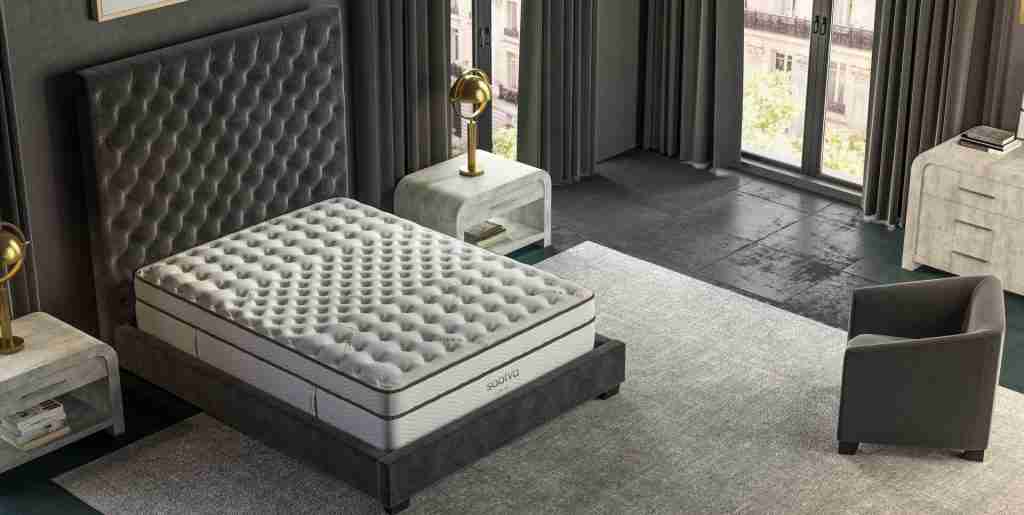 Saatva Classic Innerspring Mattress
Shop Now
 Zenhaven Latex Mattress
Shop Now
 Solaire Adjustable Firmness Mattress
Shop Now
 Contour5 Mattress
Shop Now
Suffer from back pain? Here’s how to find the best mattress for back pain.

John-Manuel Andriote
John-Manuel Andriote began writing about health and medicine while working on a master’s degree in journalism at Northwestern University in the mid-1980s. He is the author of six books, including an award-winning history of the HIV-AIDS pandemic, a book focused on building resilience, and a “fable for kids ages 5 to 105” based on the true story of a runaway cow in Andriote’s home state of Connecticut. He has contributed articles to newspapers and magazines ranging from The Atlantic to The Washington Post. He writes the “Stonewall Strong” blog focused on resilience for Psychology Today. Andriote since August 2021 has been the senior writer for Winship Cancer Institute of Emory University, in Atlanta, Georgia.
Related Stories
-
Best Labor Day Mattress Sales of 2026
-
 Best July 4th Mattress Sales of 2026
-
 Best Memorial Day Mattress Sales of 2026
Table of Contents
