
 Can You Wear Compression Socks to Sleep?
March 26, 2020, updated on October 19, 2026
7 Ways to Sleep Better With Allergies
Written by Christina Heiser
Key Takeaways
Allergy season can make it difficult to sleep well due to symptoms like nasal congestion and itchy eyes.
To improve sleep during allergy season, it’s recommended to find the right allergy medication, take a nighttime shower, deep-clean the bedroom, clear out sinuses, elevate the head, improve air quality, and keep pets out of the bedroom.
Consulting an allergist to identify specific triggers and establishing a targeted treatment plan with proper medications ensures long-term management and better rest.
Allergies can disrupt sleep by causing congestion, coughing, itching, and repeated awakenings. Reducing bedroom allergen exposure, washing bedding regularly, controlling humidity, and following an appropriate allergy-treatment plan may improve nighttime comfort. Persistent wheezing, breathing difficulty, or severe symptoms should be evaluated by a healthcare professional.
Allergy season is officially here—and the symptoms that come along with it, like nasal congestion, sneezing, and itchy, watery eyes—can make it harder to get a good night’s sleep. The good news is, by making a few changes to your nighttime routine, it’s possible to catch those much-needed Z’s this season.
Here, we’ve rounded up our best advice for sleeping soundly when you have allergies.
What the research says
Allergies can disrupt sleep by causing congestion, coughing, itching, and repeated awakenings. Research shows that reducing bedroom allergen exposure, washing bedding regularly, controlling humidity, and following an appropriate allergy treatment plan may improve nighttime comfort and help you sleep better during allergy season.
What you can do
Find out what you are allergic to by seeking an evaluation with an allergist to develop an effective treatment plan. Take a shower at night to wash pollen and allergens off your hair and skin before getting into bed. Deep clean your bedroom regularly by dusting, vacuuming, using an allergy proof mattress protector, and washing your sheets in hot water weekly. Clear out your sinuses before sleep using a neti pot or saline spray, elevate your head to reduce post nasal drip, keep bedroom humidity between 40 and 50 percent using a dehumidifier or air conditioning, and keep pets out of the bedroom.
When to seek help
Persistent wheezing, breathing difficulty, or severe allergy symptoms should be evaluated by a healthcare professional.
Find the right allergy meds
First things first: Figure out what you’re allergic to so you can come up with an effective treatment plan (if you haven’t done so already). “Start by seeking an evaluation with an allergist to find out exactly what you’re allergic to and what options are available,” Flavia Cecilia Lega Hoyte, MD, allergist, immunologist, and assistant professor at National Jewish Health in Denver, tells Everyday Health.
Common treatment options for allergies include antihistamines, steroid nasal sprays, and nasal decongestants. Always check with your doctor before adding a new medication to your routine.
Take a nighttime shower
If you’re a morning shower person, then you may want to rethink your schedule. Showering at night is a better choice for allergy sufferers since it will help to get pollen out of your hair and off your body—meaning you won’t bring the common allergen into your bed. “The pollen, dust, and pollution in your hair and skin can seriously irritate allergies and asthma,” Amy Shah, MD, tells She Knows.
Switching to nighttime showers benefits your partner too. “Whatever you carry on your body—fragrance, toxins, allergens—can adversely affect your partner, especially if they have allergies or asthma,” explains Shah.
As a bonus, the rapid drop in body temperature after a shower naturally makes you drowsy, which may be especially helpful if you have insomnia.
Deep-clean your bedroom
Allergy season and spring cleaning season are one and the same—so use this time to kick allergens that have built up in your bedroom to the curb. “People often don’t see accumulated dust bunnies until they move or redecorate, because these balls of dust, hair, and other debris form in dark corners and under furniture,” says RJ Patel, owner of Prestigious Cleaning Team in Kennesaw, Georgia.
Start the cleaning process by moving furniture out of the way, then dust, sweep, and vacuum to get at allergens that might be hidden in your bedroom. Don’t forget to clean under your bed and dust off oft-overlooked items like lampshades. Keep up with these cleaning habits weekly to maintain an allergy-free bedroom.
Your mattress and bedding should be cleaned regularly as well. Give your mattress a once-over with your vacuum to suck up dust, dust mites, and crumbs—and encase it in an allergy-proof mattress protector. (Here is more advice for spring-cleaning your mattress.) If your mattress is past its prime, check out our guide to organic mattresses to find a new one that’ll help keep allergies at bay.
When it comes to washing your sheets, it’s best to do so in hot water (we’re talking 130 degrees Fahrenheit), changing them out once a week or every other week. Avoid line-drying them because this will expose them to allergens.
Clear out your sinuses
Stuffy nose keeping you awake? Clearing out the congestion before getting into bed will help you feel better. “Before you go to sleep, the most effective way to clear your nasal and sinus passages is with irrigation such as a neti pot,” says Darria Long Gillespie, MD, emergency room doctor and author of Mom Hacks. If a neti pot is uncomfortable, try a nasal saline spray, she suggests. Oh, and that nighttime shower will also help open up your nasal passages before bed, according to the National Sleep Foundation.
Raise your head
Elevating your head and chest in bed will reduce post-nasal drip in the back of your throat so you don’t spend the night coughing, says Long Gillepsie. A pile of pillows, a wedge pillow, or an adjustable base are all good options for raising your head in bed. (Learn why drooling could be a sign of seasonal allergies.)
Improve your bedroom’s air quality
According to the American Academy of Allergy, Asthma, and Immunology (AAAAI), it’s best to keep the humidity level in your bedroom between 40%-50%. This is something you can monitor with a hygrometer, a digital humidity meter. Sleeping with the A/C or dehumidifier on can help remove excess moisture in the air and provide relief from mold, mildew, and dust mite allergies.
“A dehumidifier can improve air quality,” Eric Ball, spokesperson for Lowe’s, tells the Washington Post. Ball suggests looking for a dehumidifier with antimicrobial technology—this will discourage bacteria growth in the water collection bucket.
Keep pets out
The proteins in a pet’s dander, skin, saliva, and pee can cause an allergic reaction or make asthma symptoms worse in some people, notes the AAAAI. Plus, pet hair or fur can collect outdoor allergens, like pollen and mold spores, says Russell Hartstein, pet expert and CEO of Los Angeles celebrity dog training company Fun PawCare. That’s why, if you suffer from allergies, you’ll want to consider setting up boundaries for your cat or dog.
“If your respiratory allergy symptoms are triggered by pet dander, keep all pets out of the bedroom,” Hoyte tells Everyday Health. “A lot of people will tell me they don’t let their pets sleep in bed with them, but upon further discussion, it comes up that the pet does spend all day in their bedroom.” It’s essential to keep your bedroom pet-free day and night to prevent animal dander from ruining your sleep, adds Hoyte. (Here’s how to find the best pet bed for your furry friend.)
FAQs
Can allergies cause insomnia and poor sleep quality?
Yes, seasonal allergies can significantly disrupt your sleep. Nasal congestion, sinus pressure, throat irritation, and coughing often peak when lying down, which can lead to frequent nighttime awakenings, sleep fragmentation, and difficulty falling asleep.
Why do seasonal allergy symptoms worsen at night?
Allergy symptoms often worsen at night because lying flat allows mucus to pool in the back of the throat, increasing post nasal drip and nasal blockages. Additionally, allergens like pollen and dust mites accumulate on clothing, bedding, and carpet throughout the day and get stirred up during sleep.
Should I take allergy medication before going to bed?
Taking long-acting, non-drowsy antihistamines or steroid nasal sprays in the evening can help control nighttime congestion and prevent morning flare-ups. However, you should always consult a healthcare provider or pharmacist to choose the best timing and medication for your specific needs.
How often should I wash my bedding during allergy season?
Wash your sheets, pillowcases, and duvet covers at least once a week in hot water (at 130 degrees Fahrenheit or higher) to kill dust mites and neutralize pollen. Avoid line-drying laundry outdoors, as damp fabrics easily trap airborne allergens.
Does an air purifier in the bedroom help with allergies?
An air purifier equipped with a high efficiency particulate air (HEPA) filter can help capture airborne particles like pollen, pet dander, and dust mites, reducing allergen exposure while you sleep and improving overall indoor air quality.
Allergy-proof your bedroom with a high-quality mattress protector
This carousel automatically rotates through products. Use the pause button to stop rotation, or use the slide dots to navigate.
Made from cotton knit that wicks away moisture with a waterproof barrier that allows airflow while effectively blocking liquids.
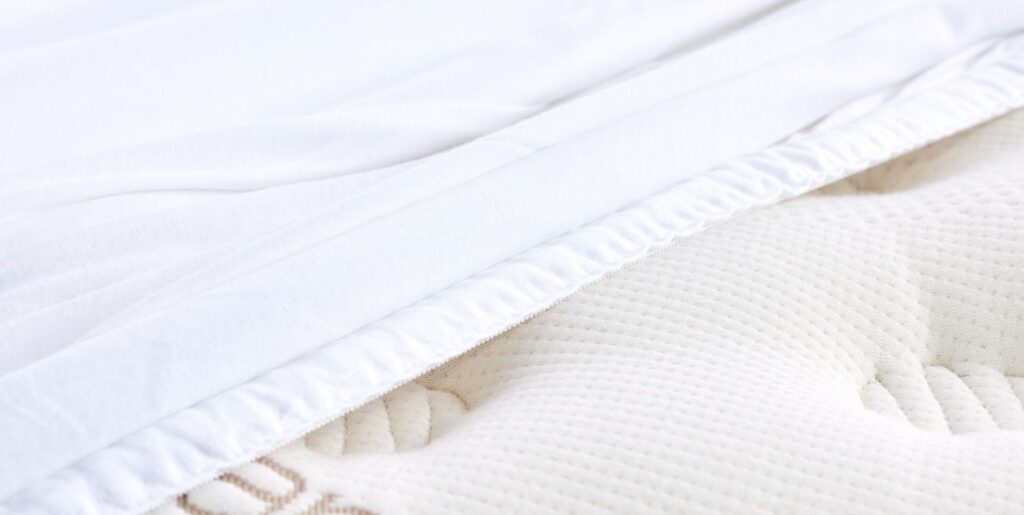 Waterproof Mattress Protector
Shop Now
Want more advice for sleeping better with allergies? We’ve put together this handy list of articles just for you:

Christina Heiser
Christina Heiser is the content director at Saatva. She has held previous positions at Everyday Health, Women’s Health, and L’Oréal. Christina serves as an ambassador for the nonprofit organization Beyond Celiac and is passionate about raising awareness about celiac disease. When she’s not working, you can find Christina traveling the world in search of the best gluten-free eats and trying out the latest beauty, fitness, and wellness trends. Check out her newsletter, Celiac Self-Care.
Related Stories
-
Can You Wear Compression Socks to Sleep?
-
 Are There Fleas in Your Bed? Here’s How to Tell (and What to Do About It)
-
 Can Ube Help You Sleep Better?
Table of Contents
